
Petrolia and War
These are all the
Military photos that I have , however I will be
installing more later. As always
if you know any
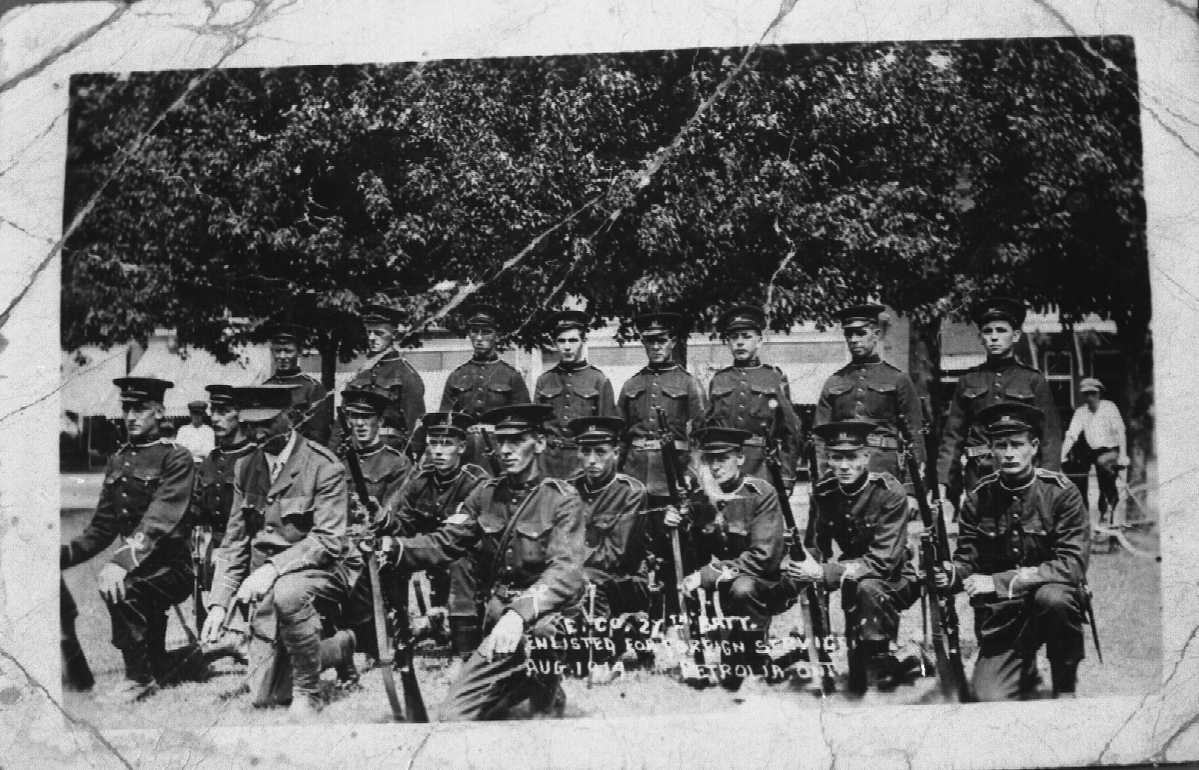
of the names please let me know. Most of the pics
below are of Petrolia's men that went to war in
WW1 and show some of the men at training camp in
London Ontario.
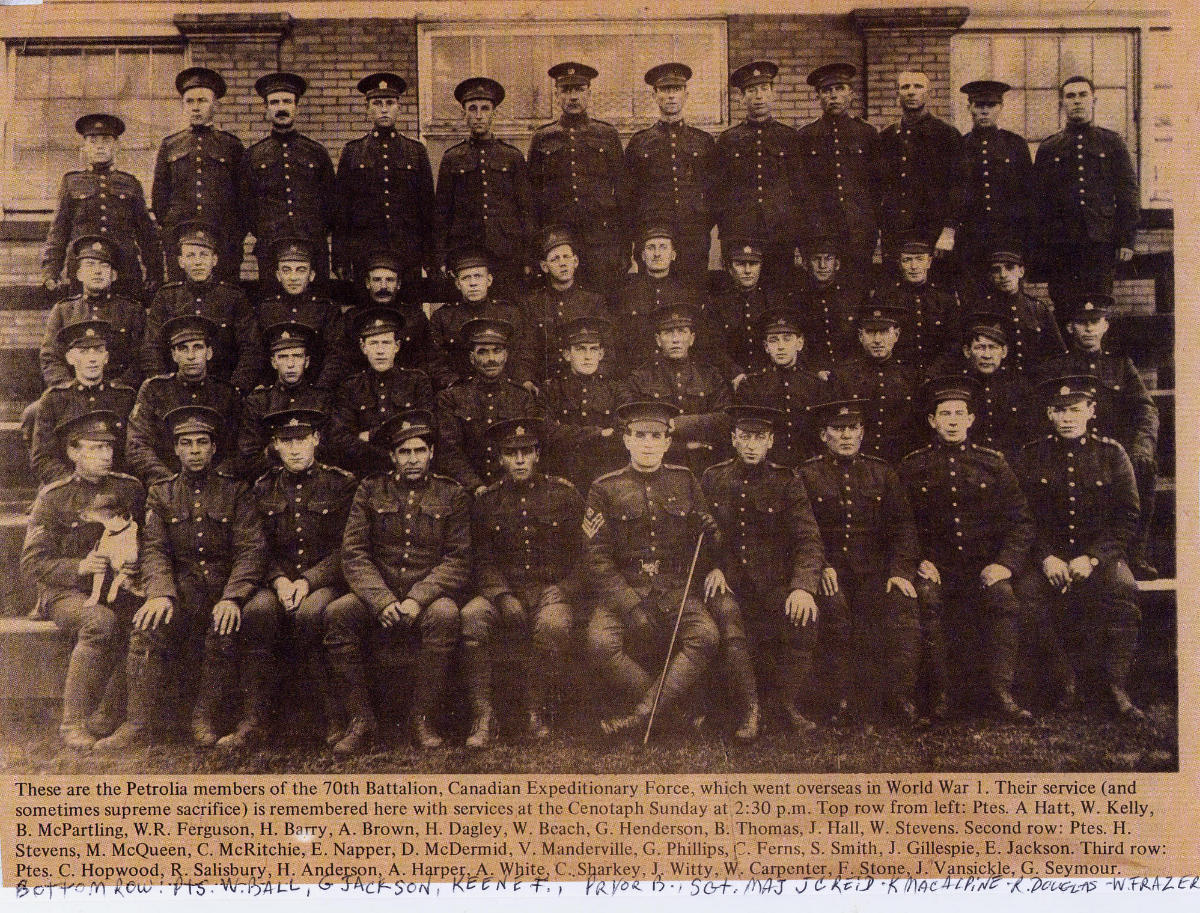
" This is Petrolia's contribution to
the 1st World War.
The 18th and 34th Battalion. A fine
body of lads."
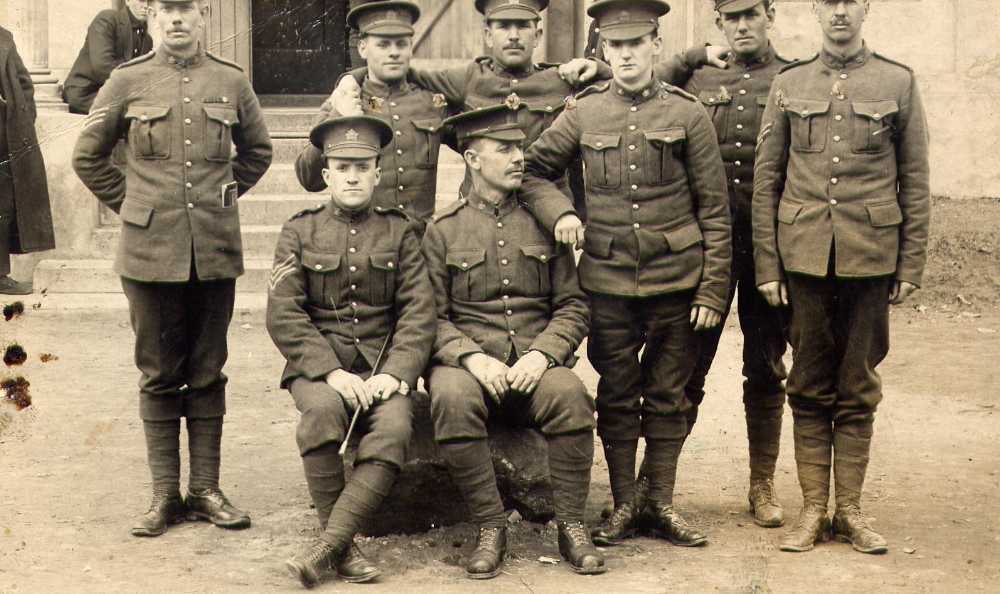 Probably some of the 18th or 34th Battalion
|
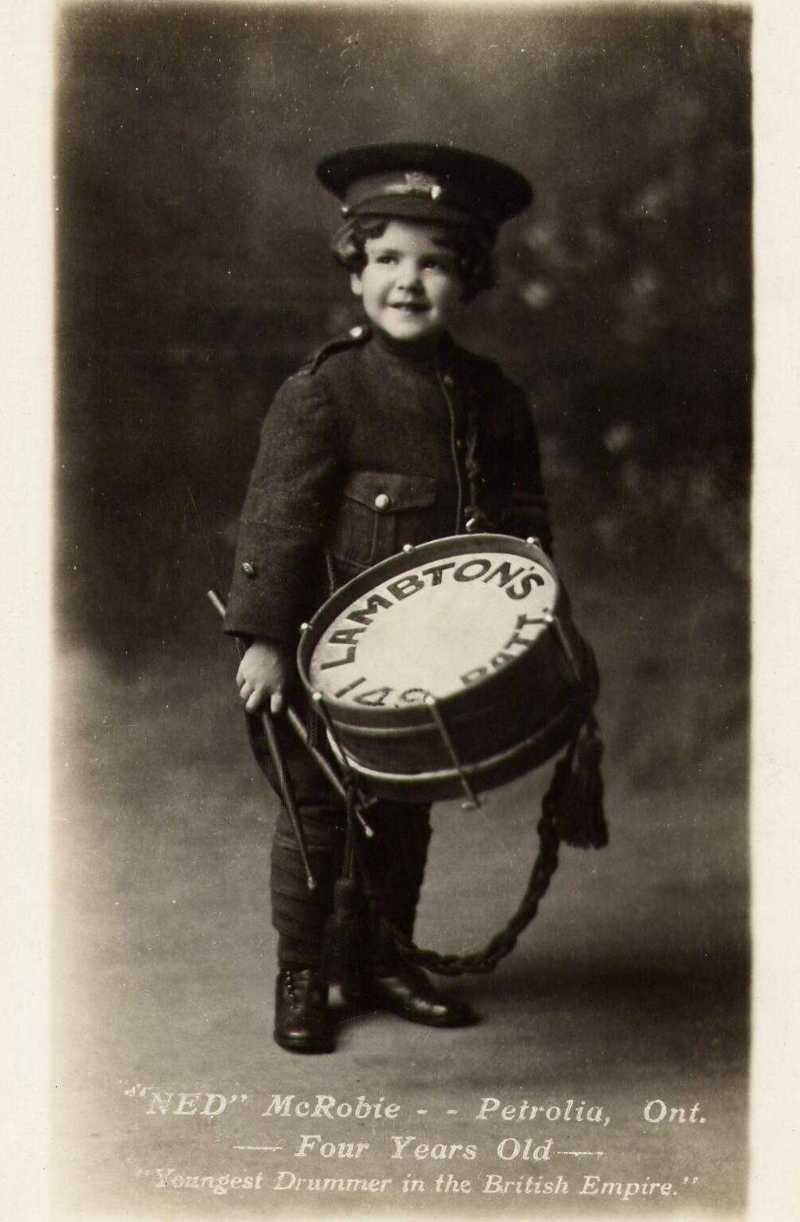 Ned McRobie |
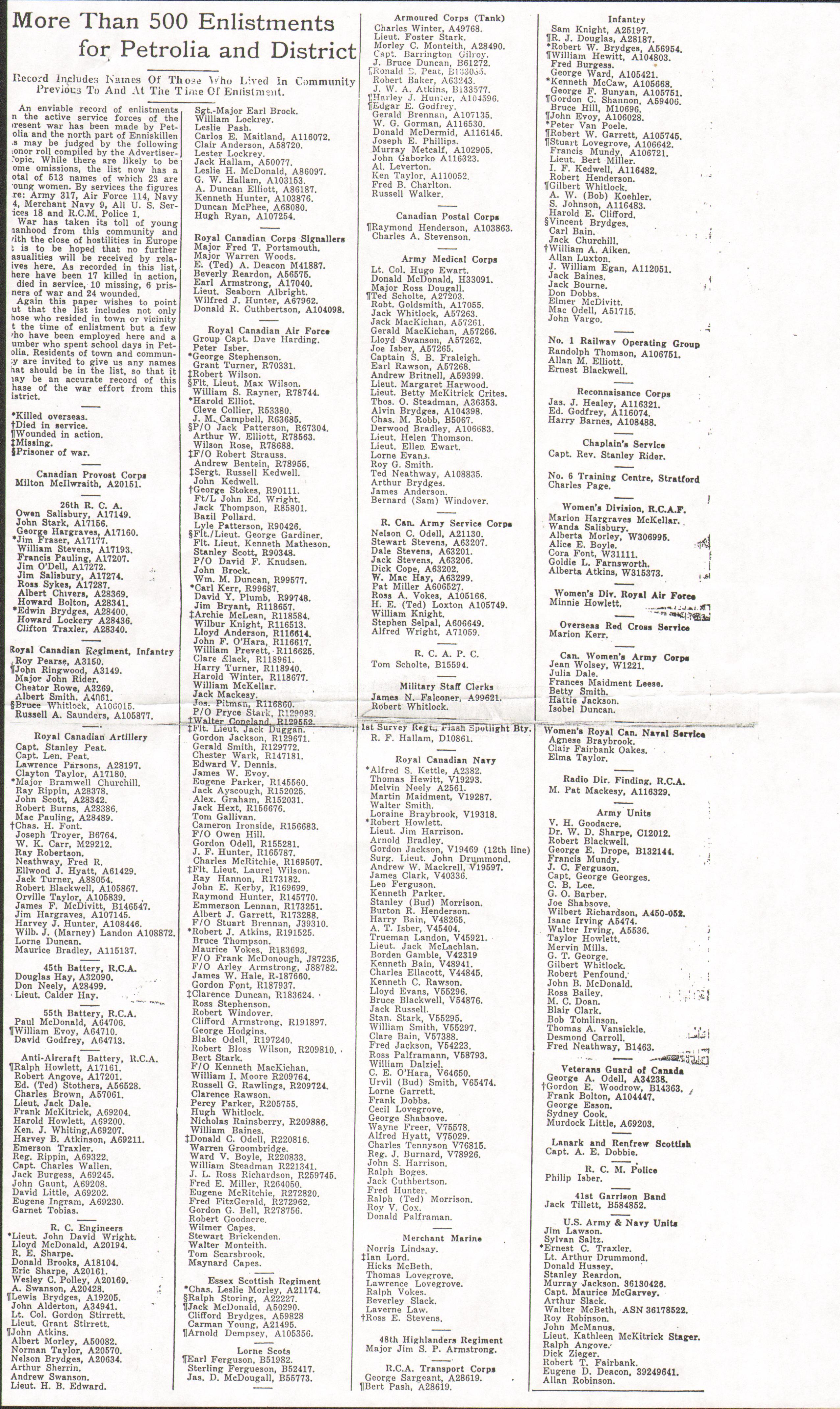 Petrolia Muster list ca.1943 |
|
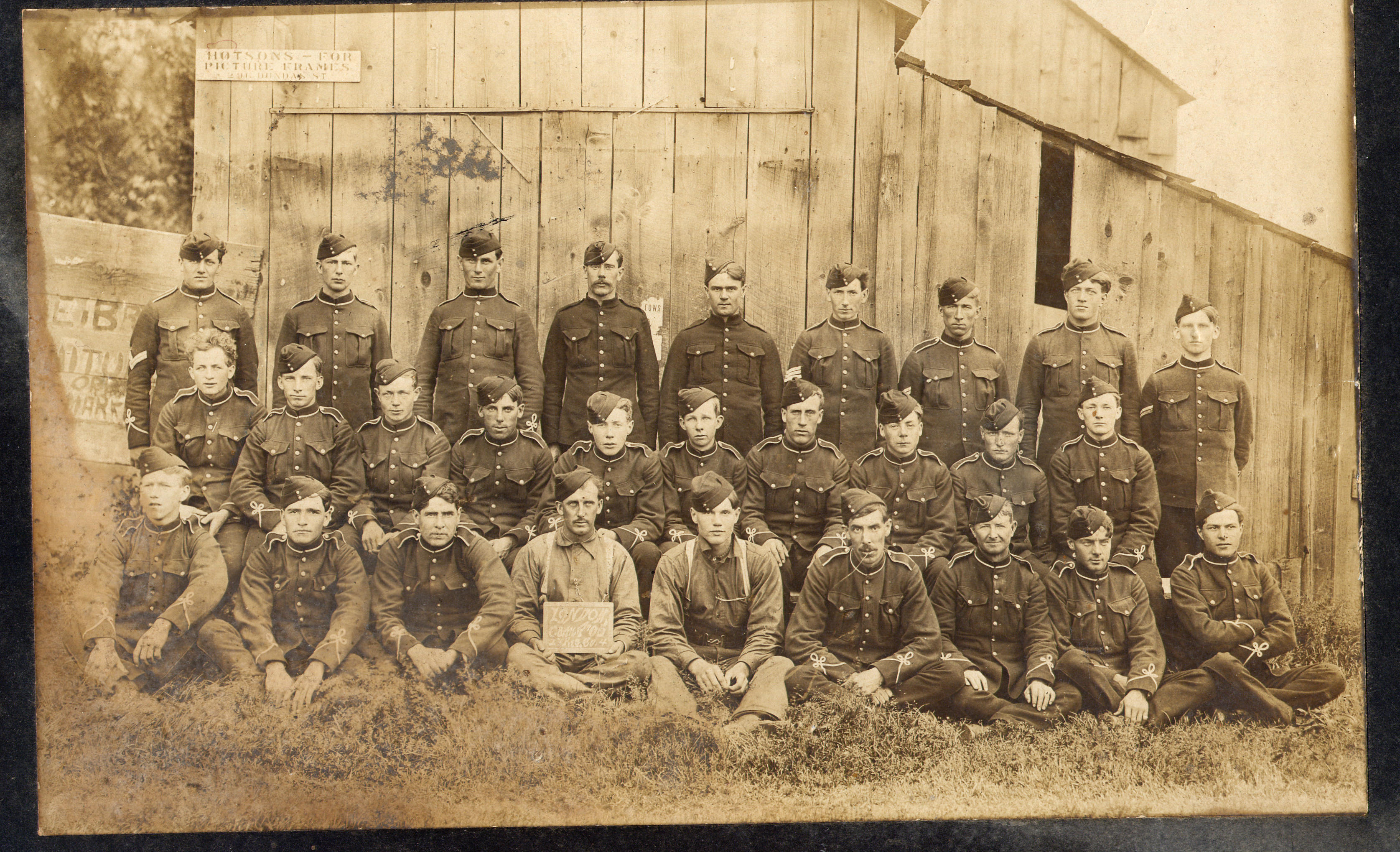
Don Gibson collection |
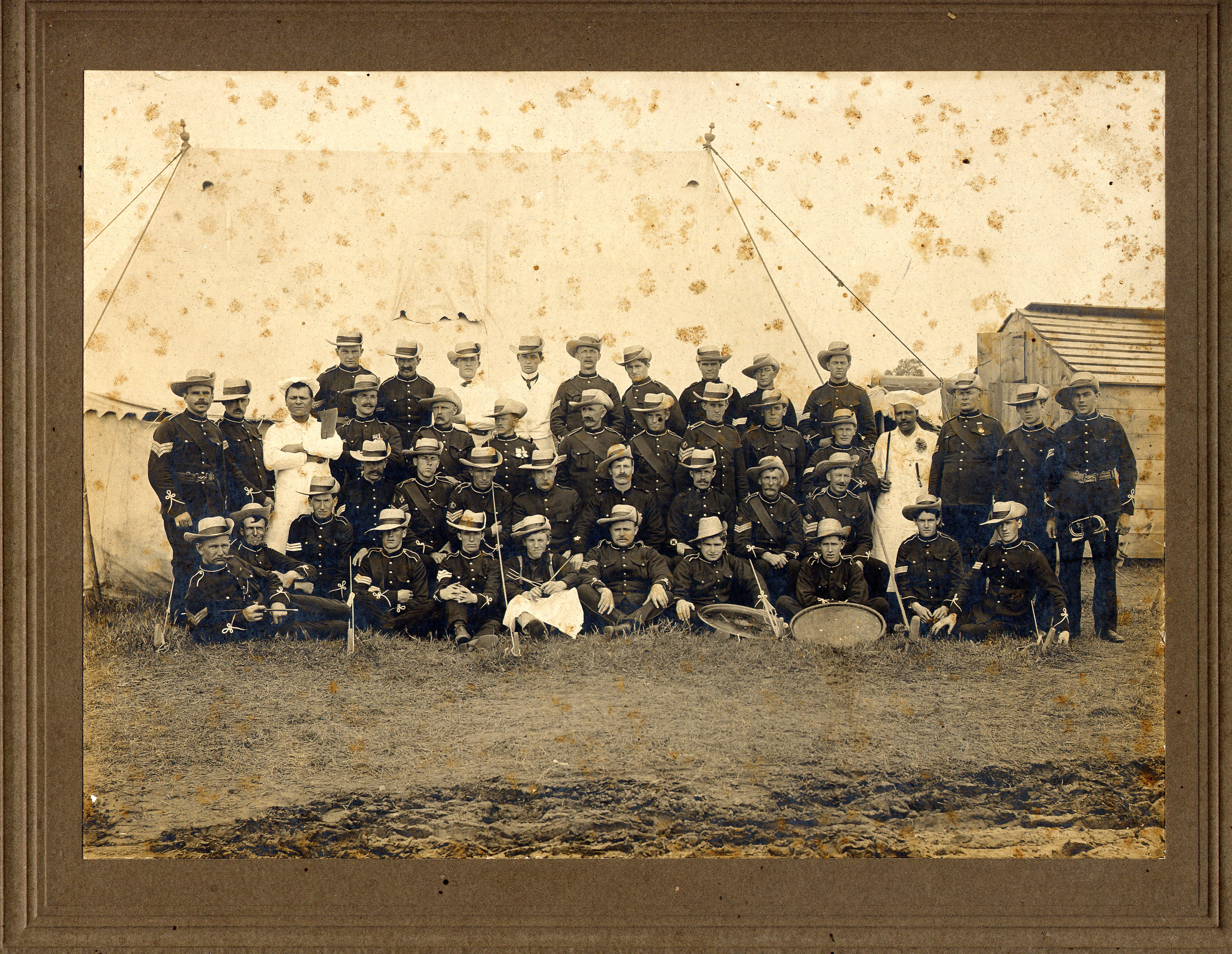
Some of these men sport their Boer War medals Don Gibson collection |
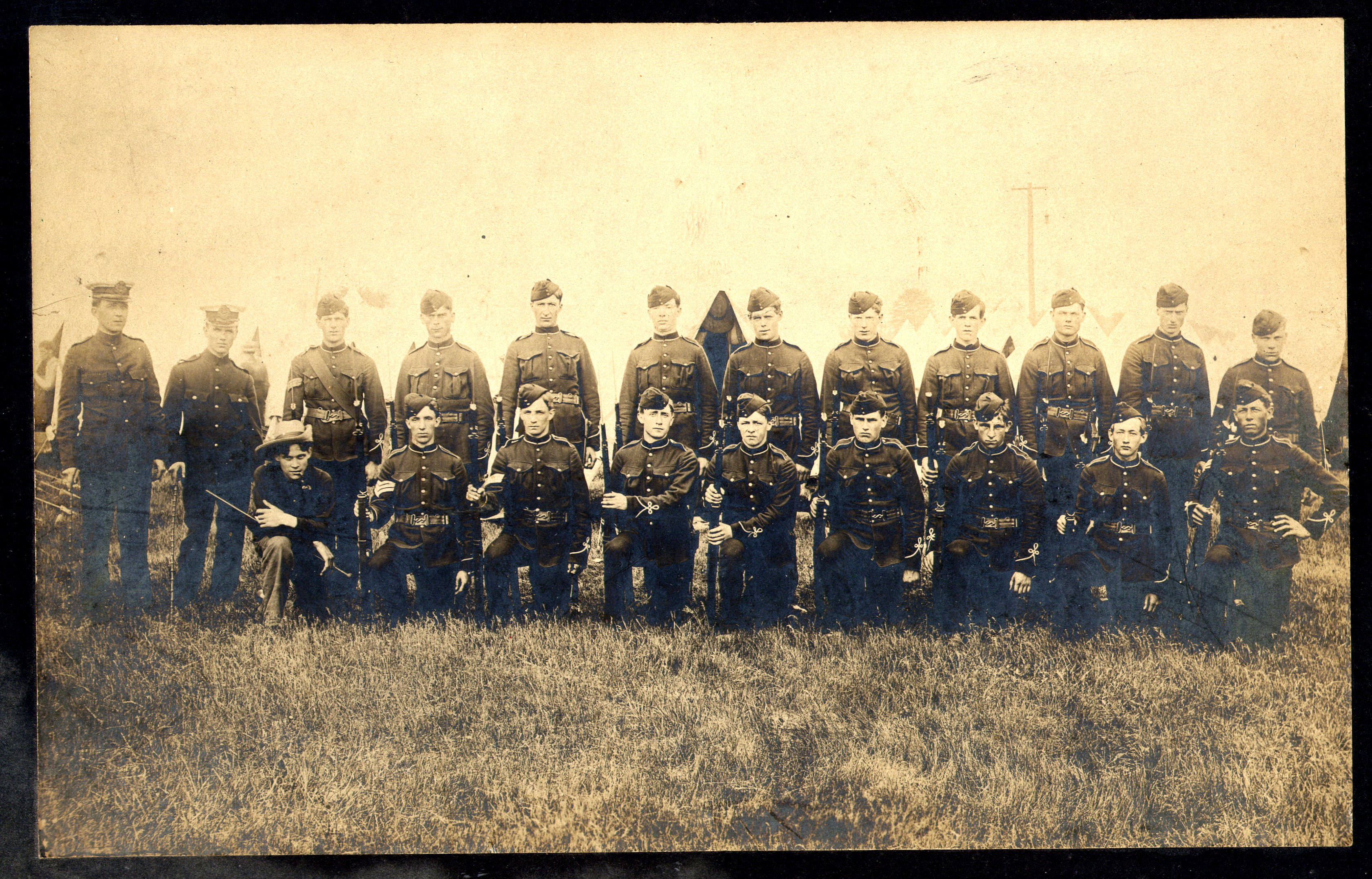
Don Gibson collection |
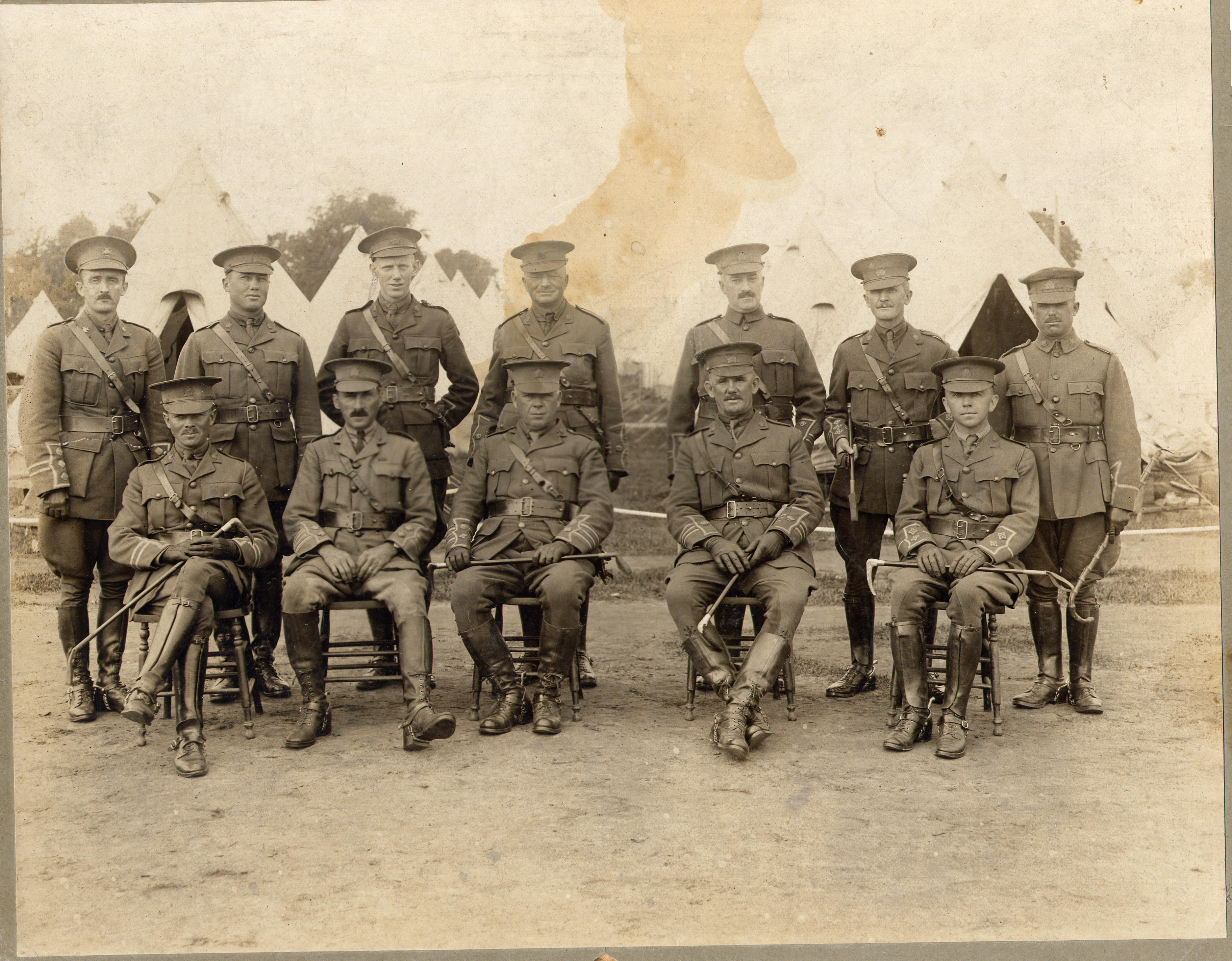
Don Gibson collection |
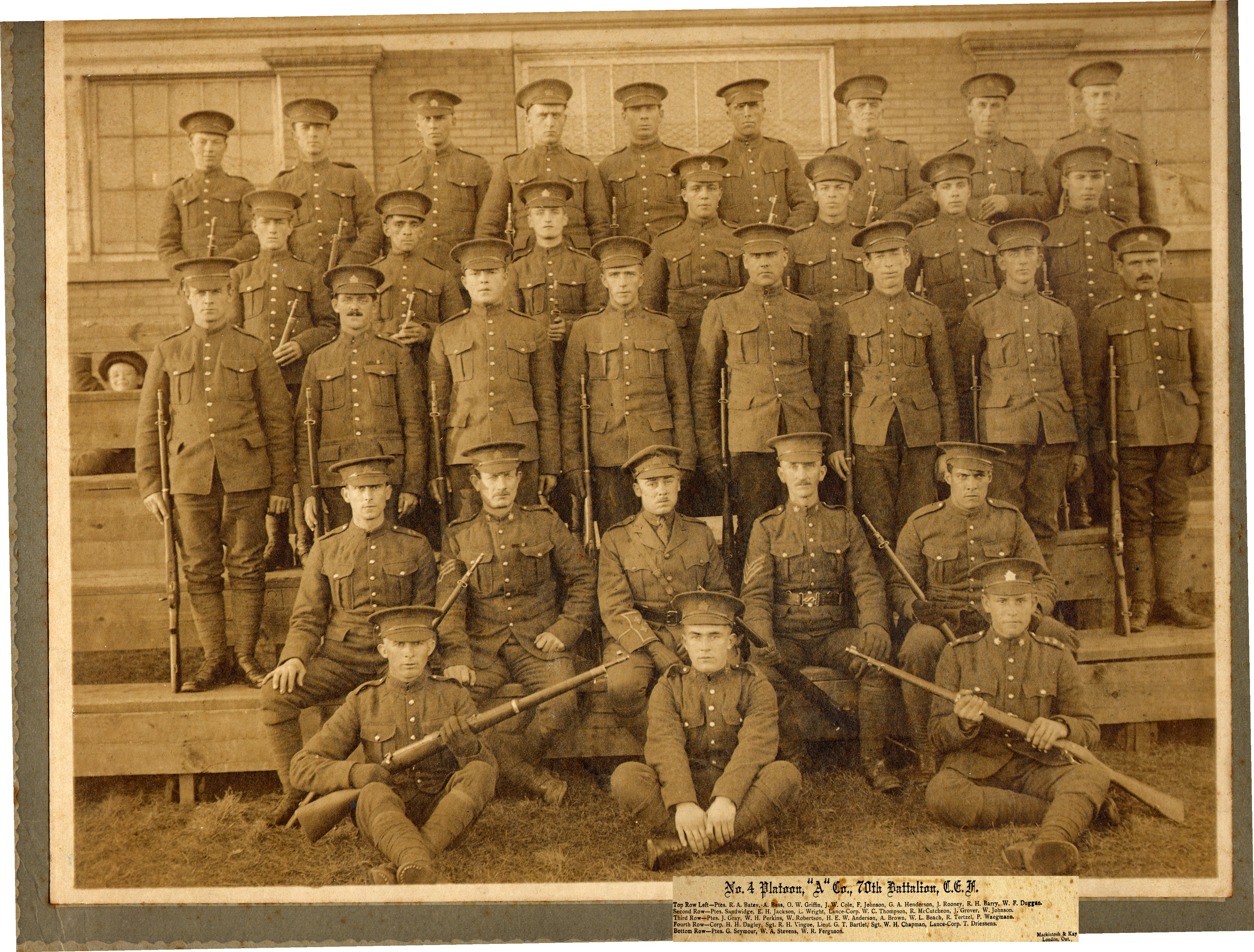
Don Gibson collection |
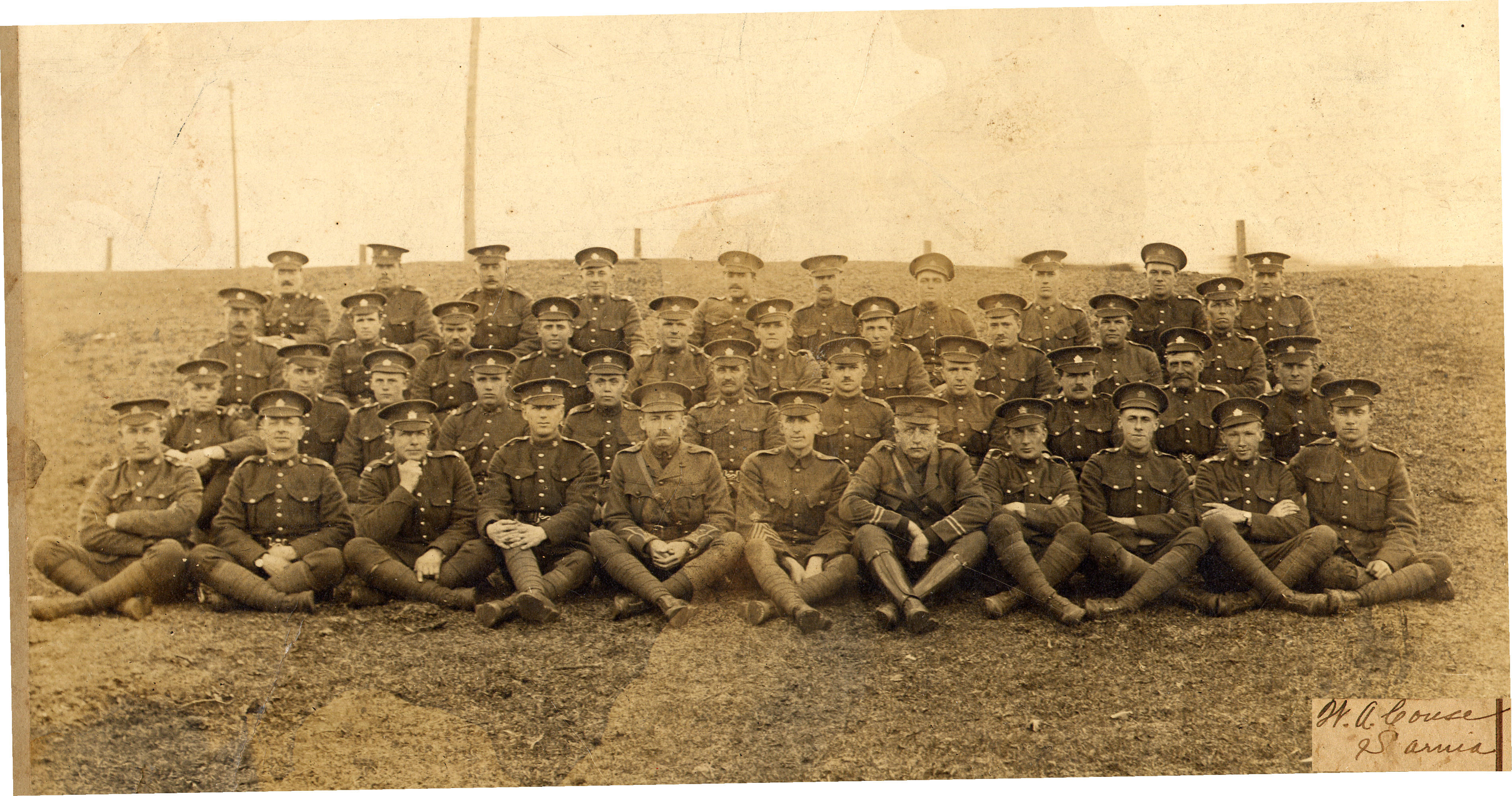
Don Gibson collection |
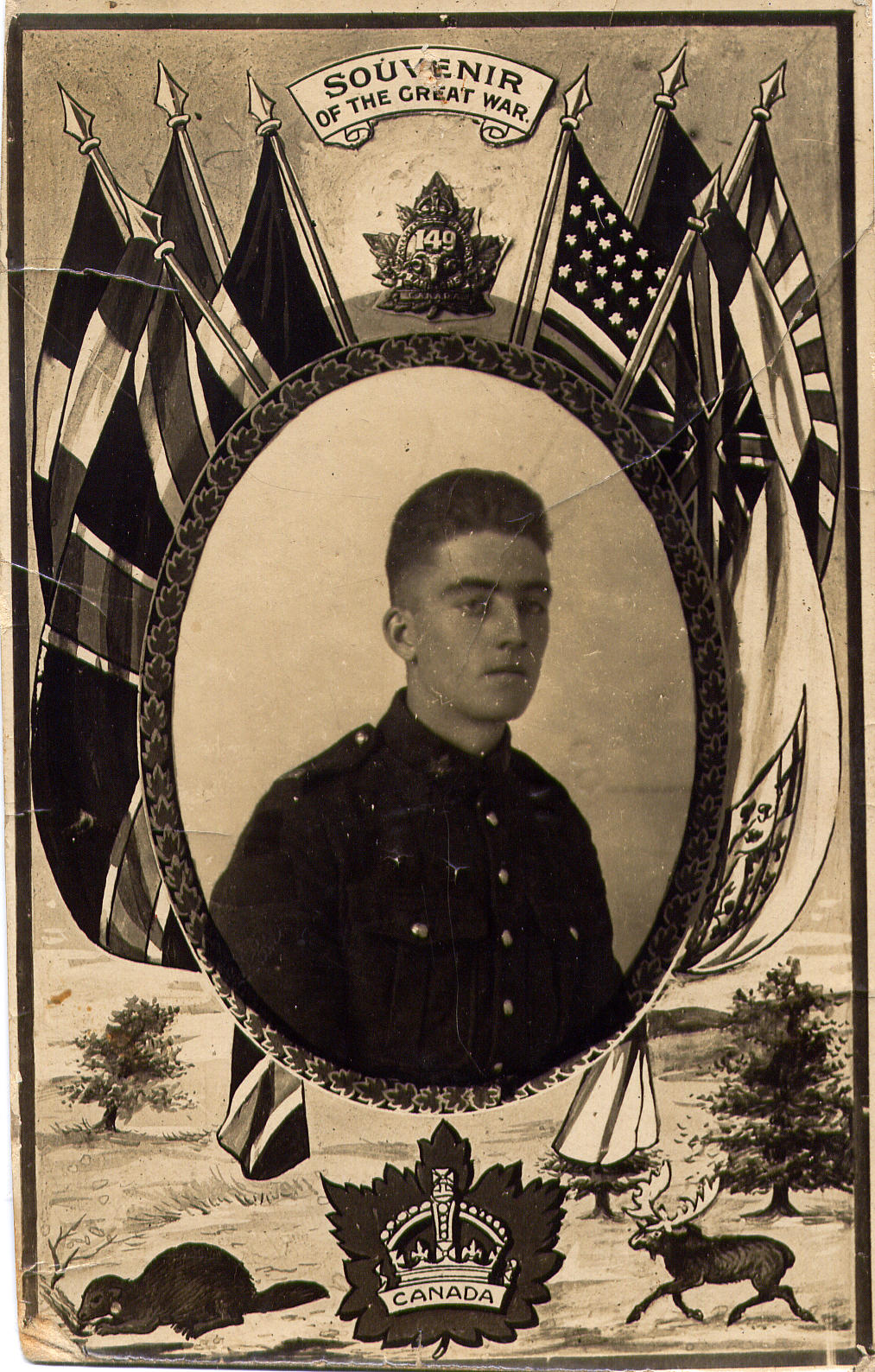
Don Gibson collection |
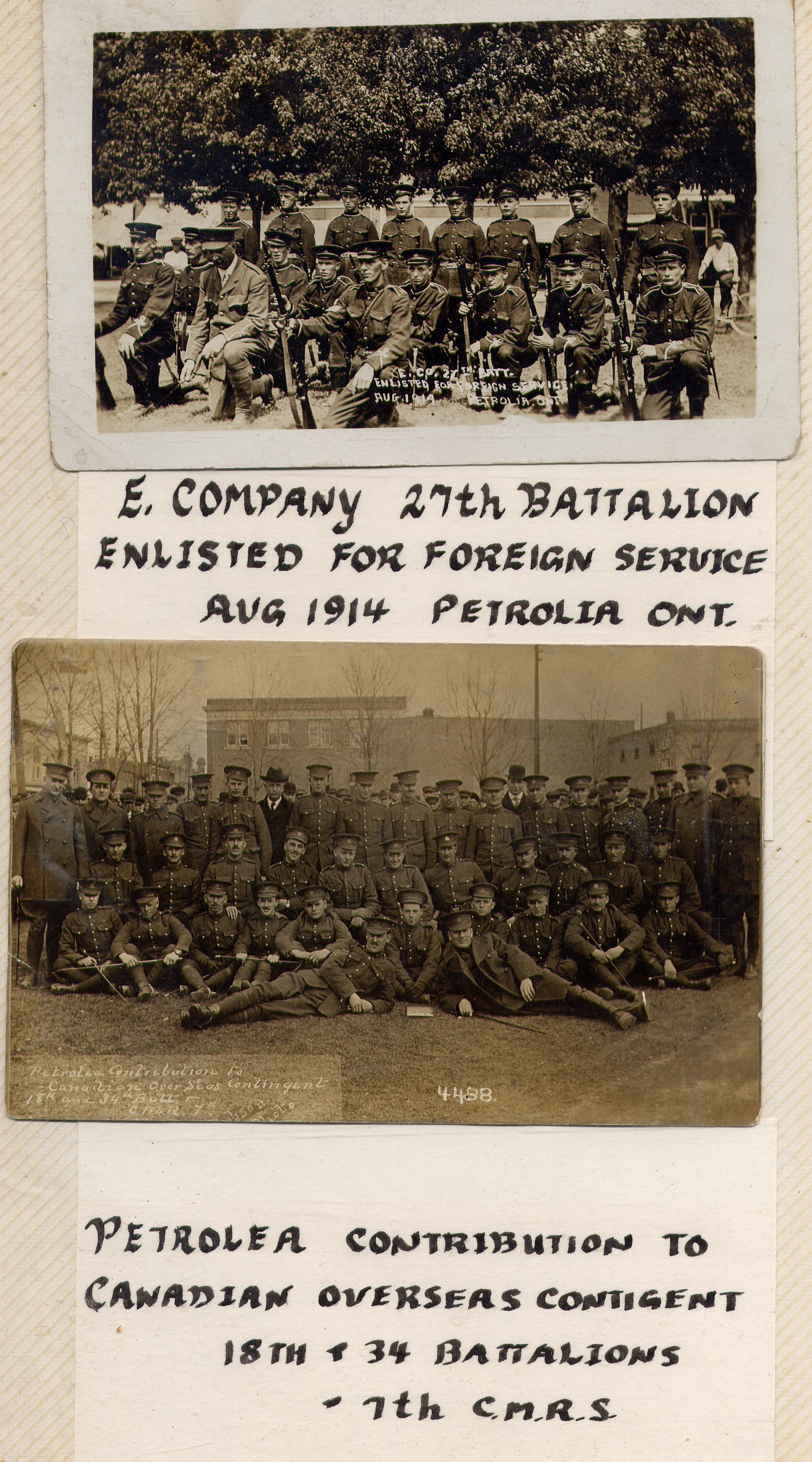
Don Gibson collection |
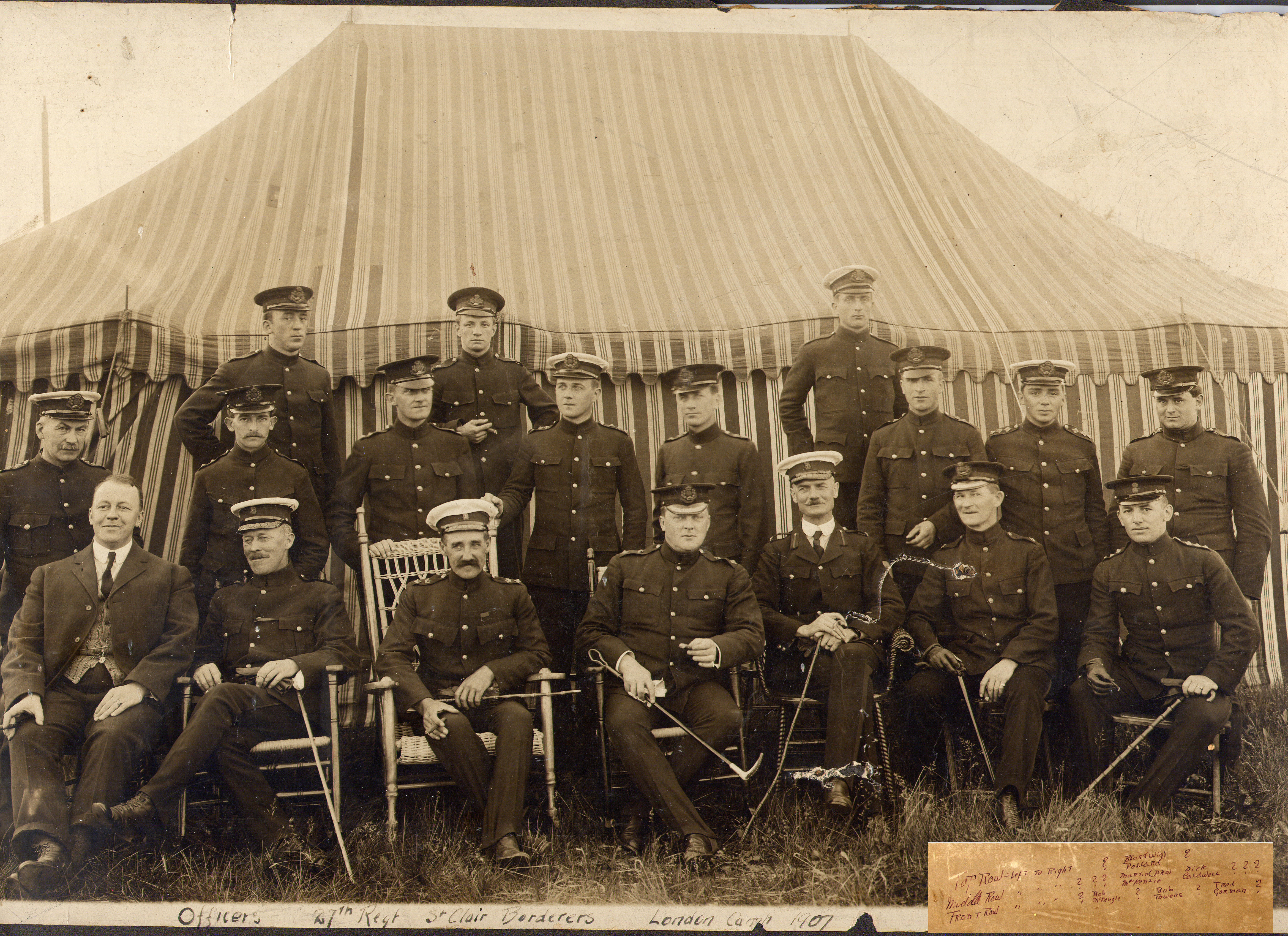
Don Gibson collection |
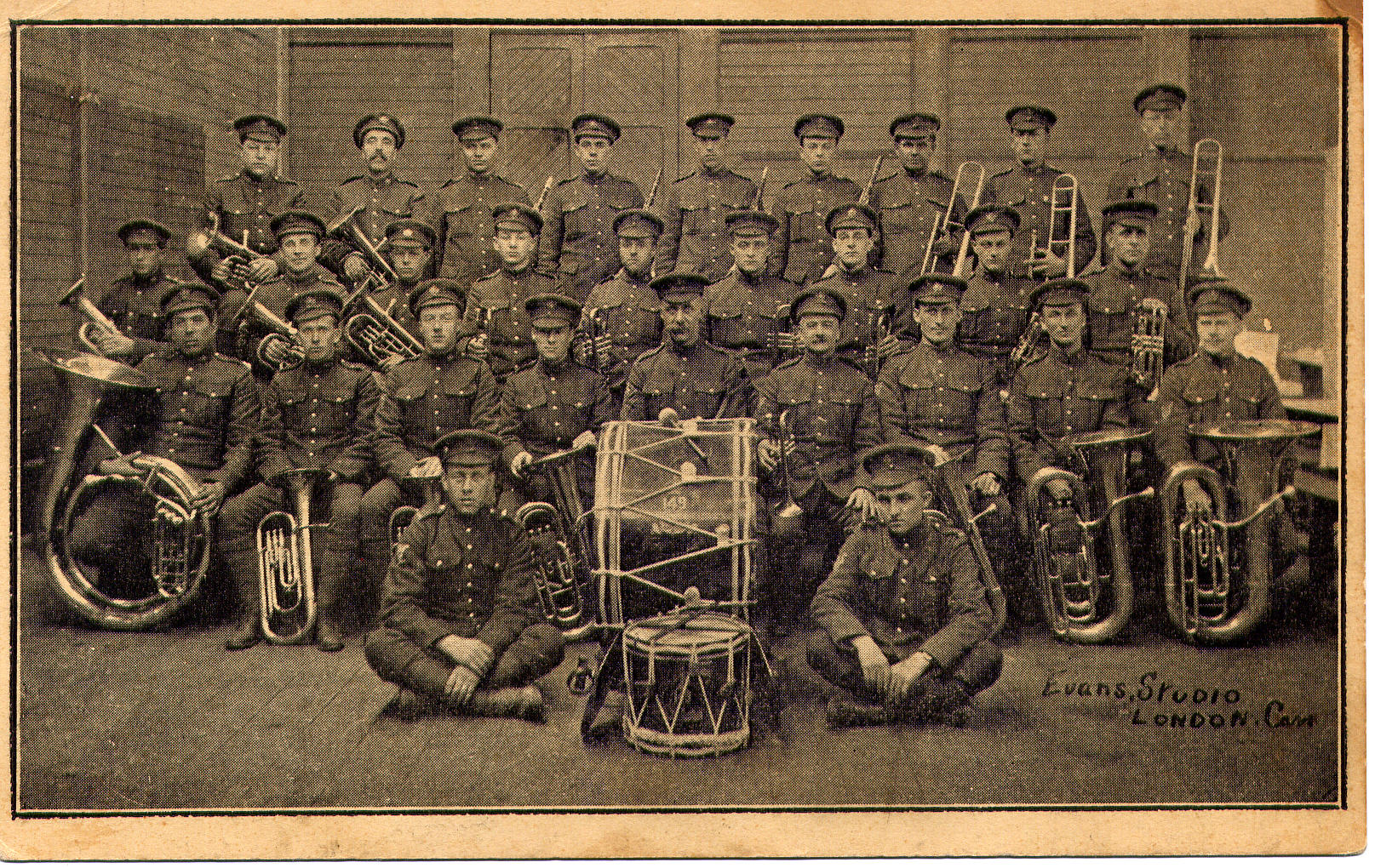 Don Gibson collection |
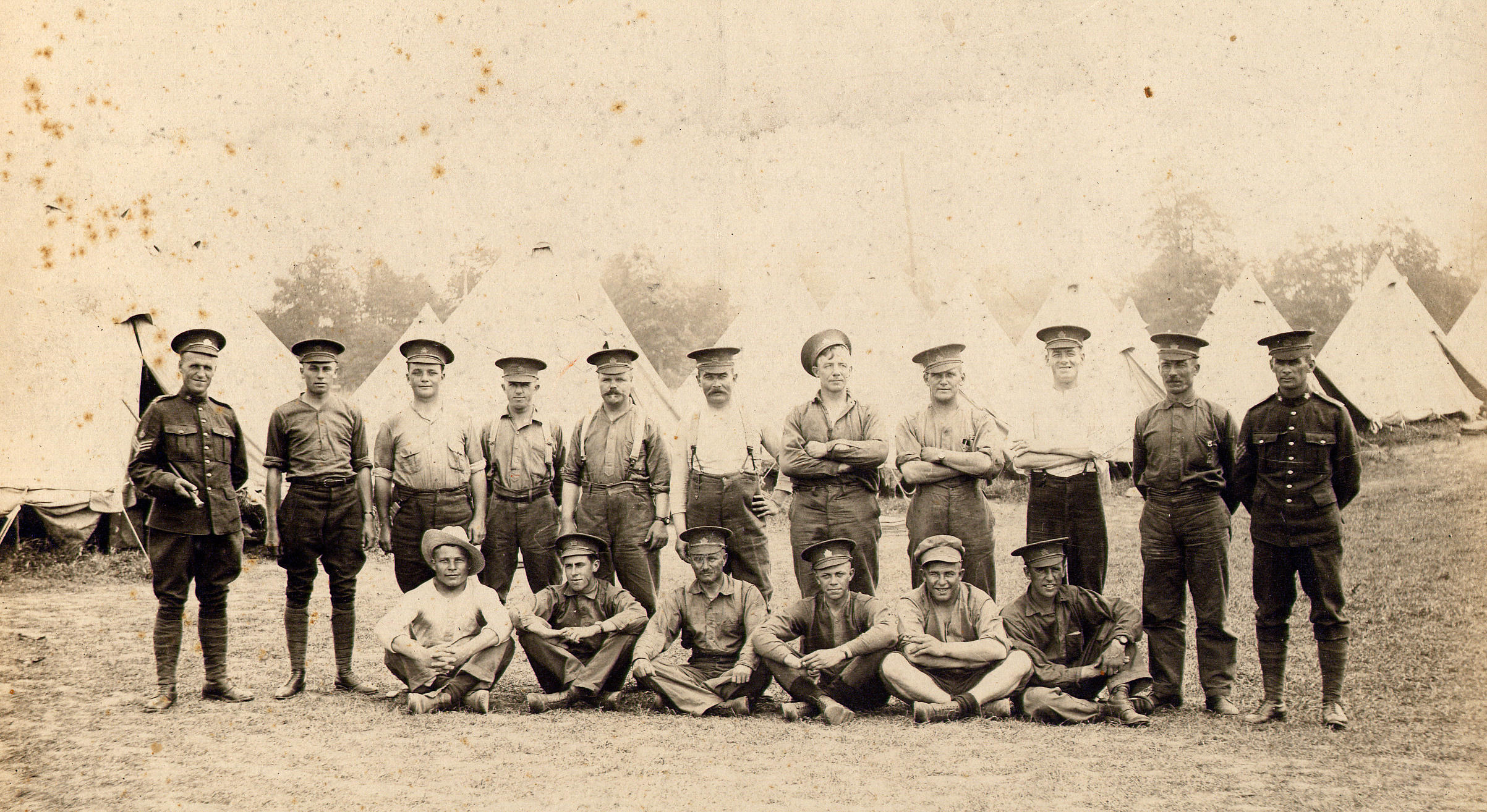
Don Gibson collection |
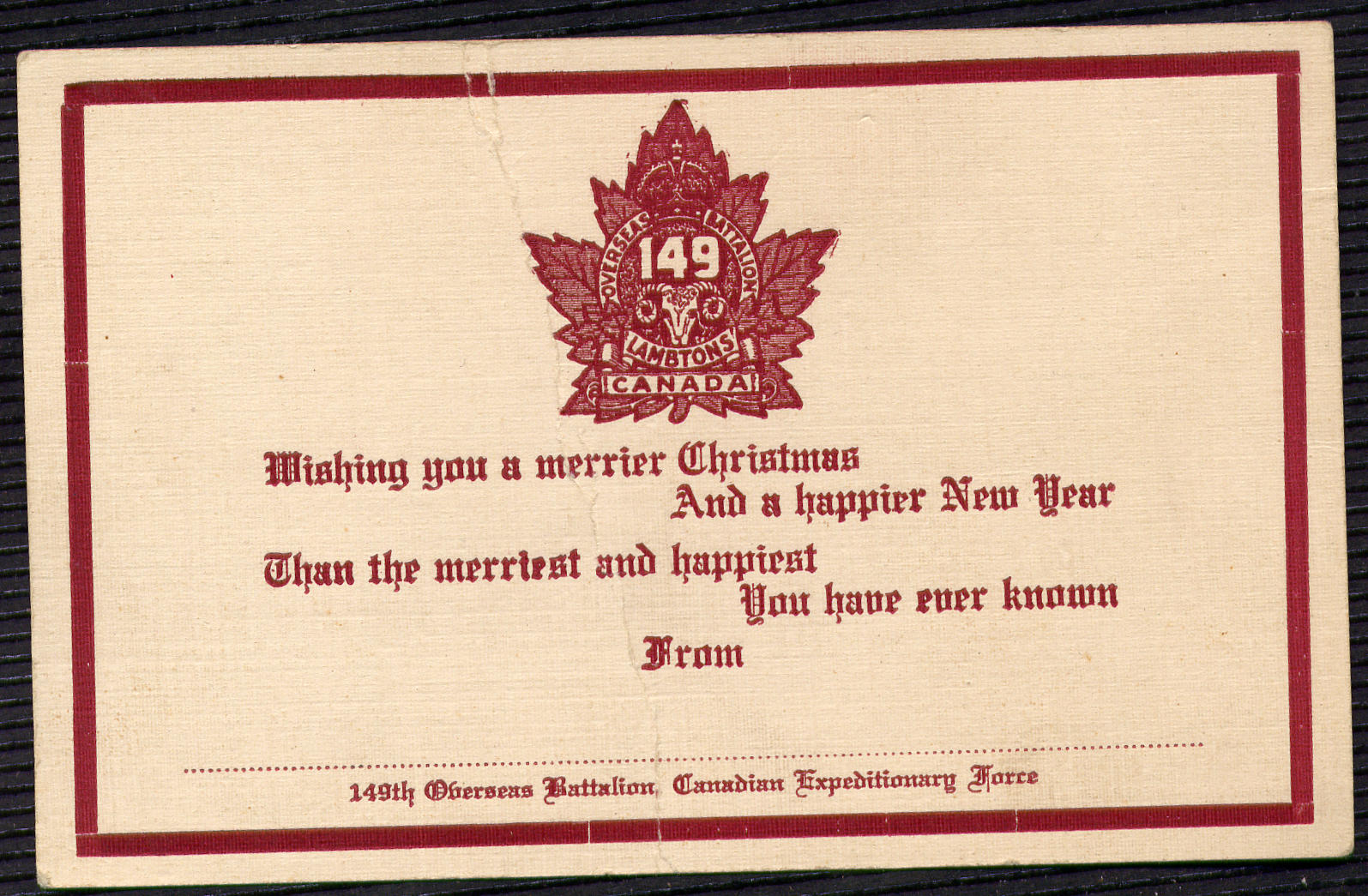
Don Gibson collection |
|
From a group of pics marked Johnson
|
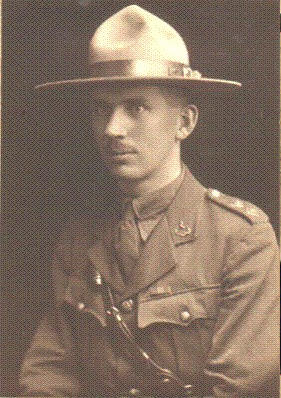 Click on this pic of Major George Stirrett to see an amazing work by Petrolia's Gene Smith, president of PEACEKEEPER PARK, A Living Memorial http://www.peacekeeperpark.com/ |
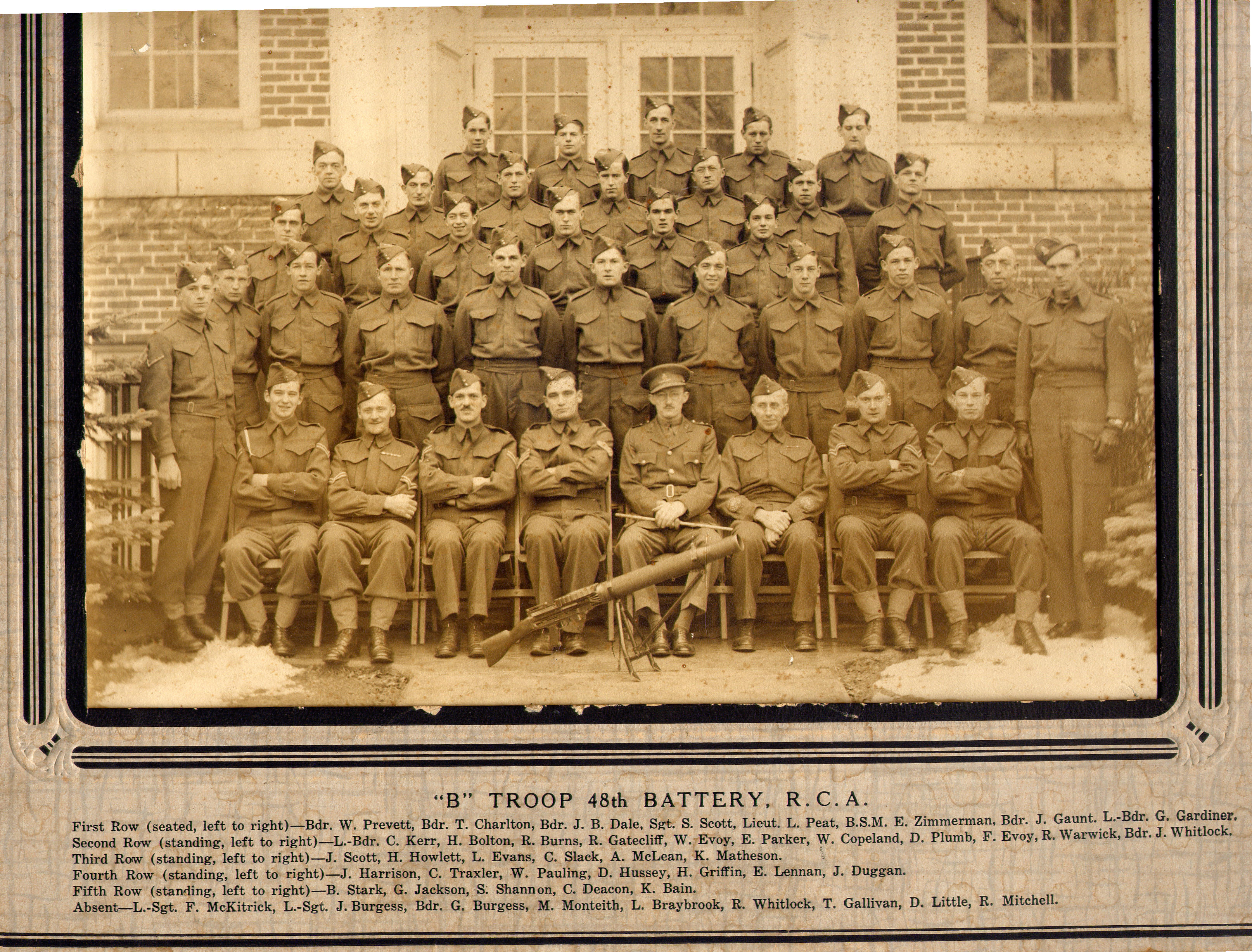
Don Gibson collection |
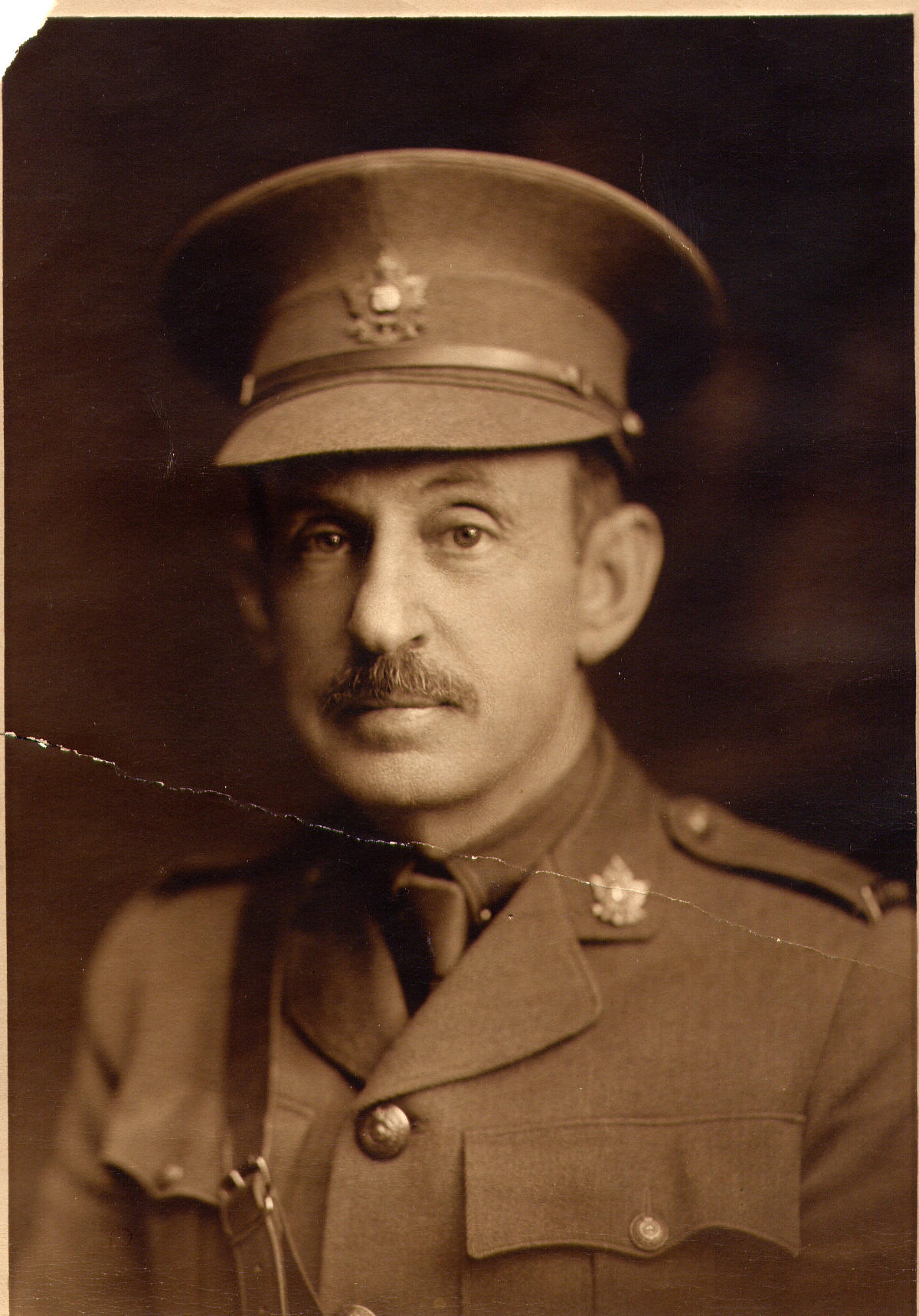
Don Gibson collection CO. Fairbank |
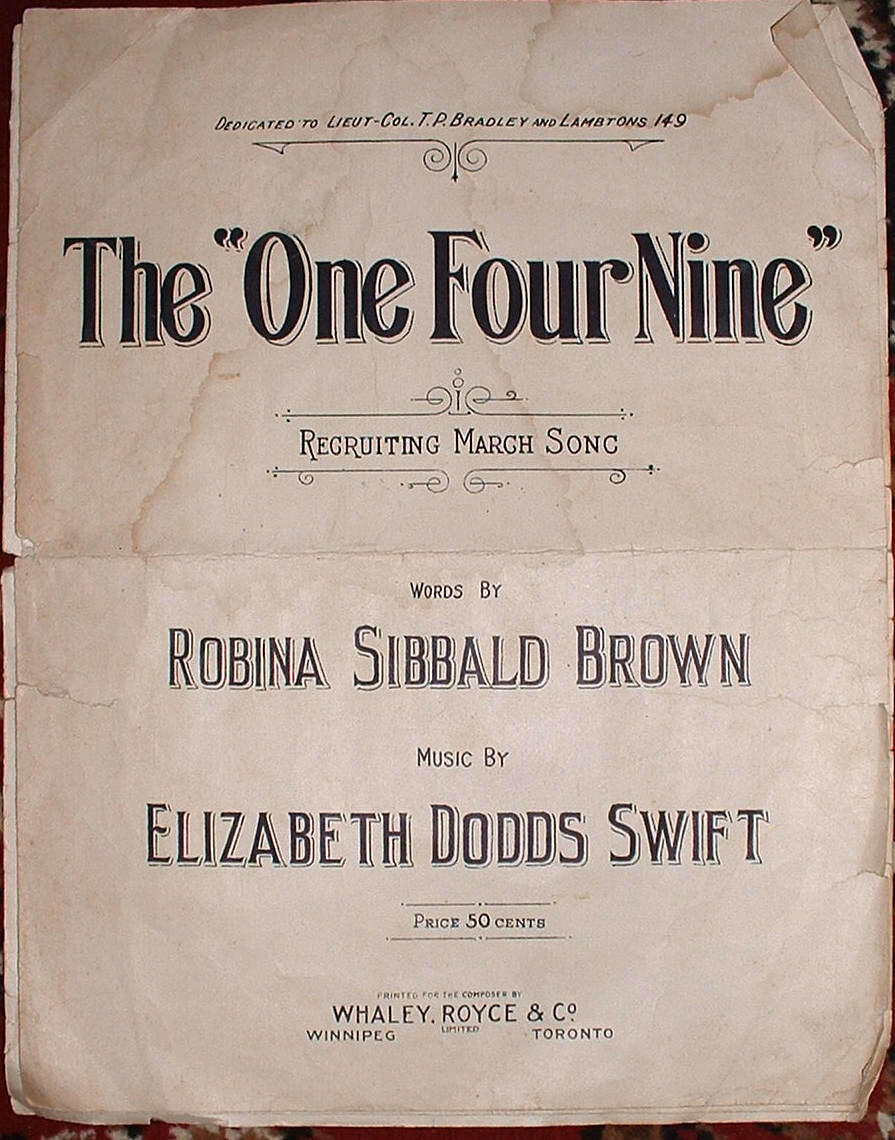 Don Gibson collection A march wtitten
for Lambton's 49th
|
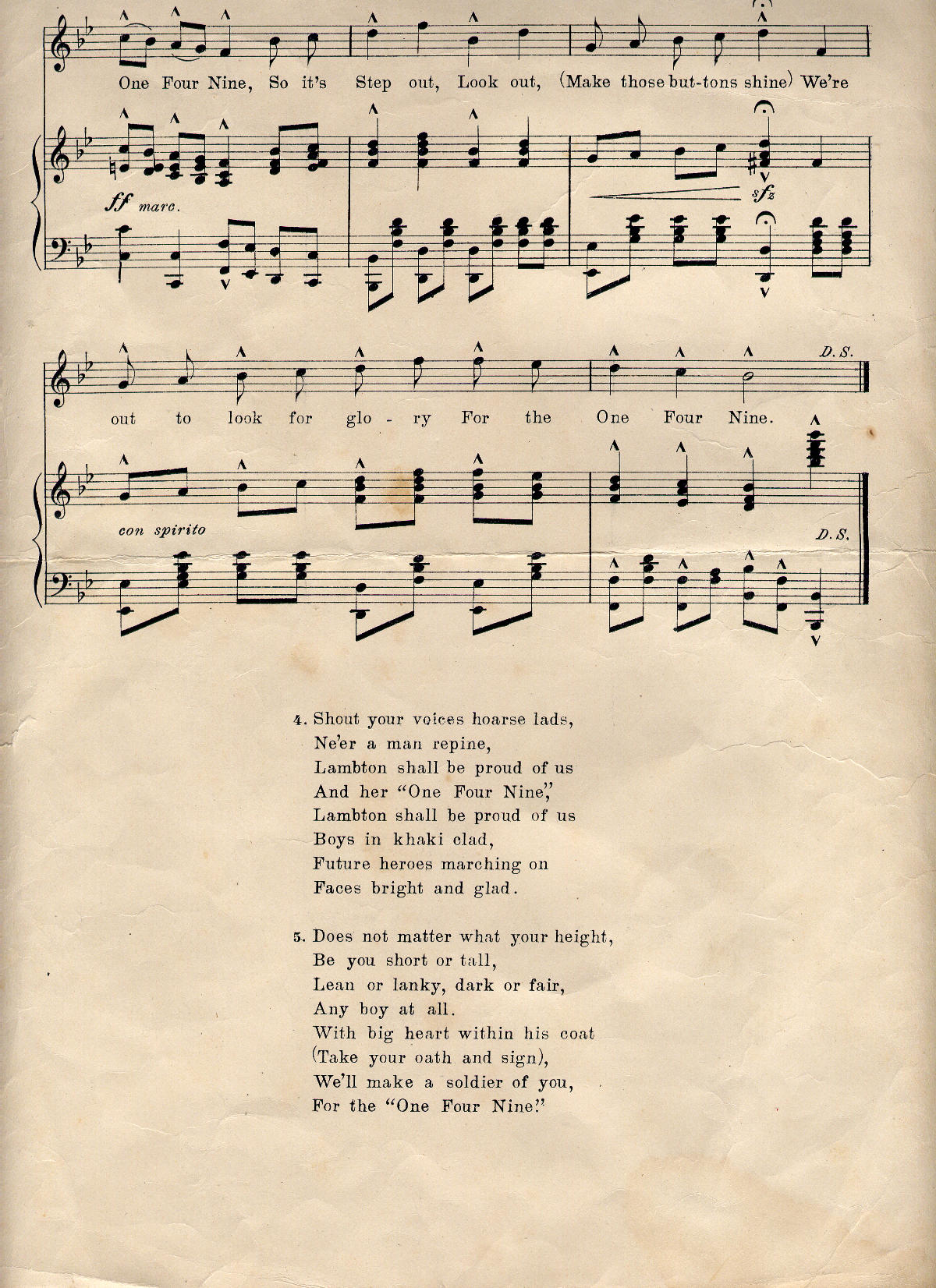
Don Gibson collection |
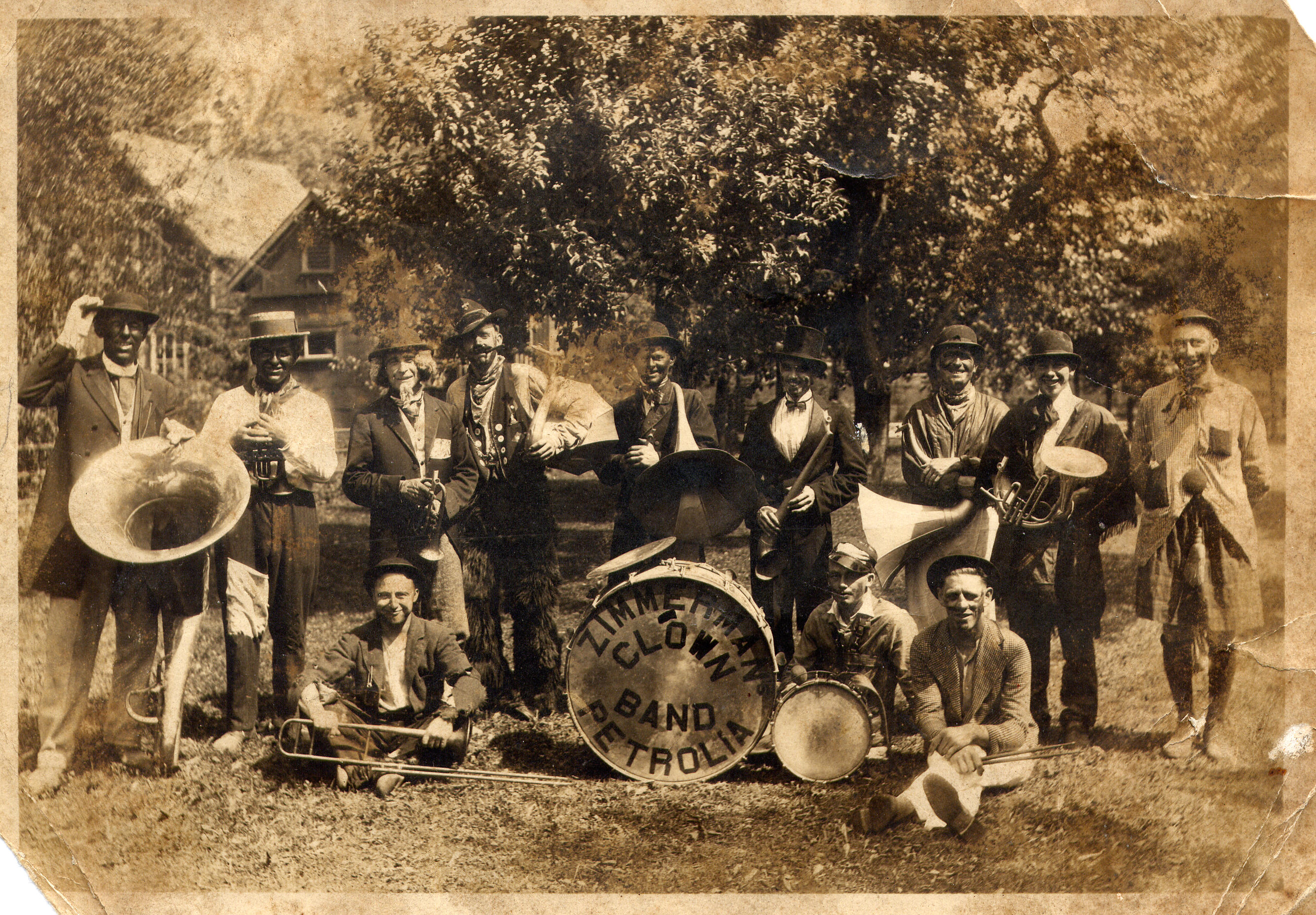 The Zimmerman
clown band of Petrolia
|
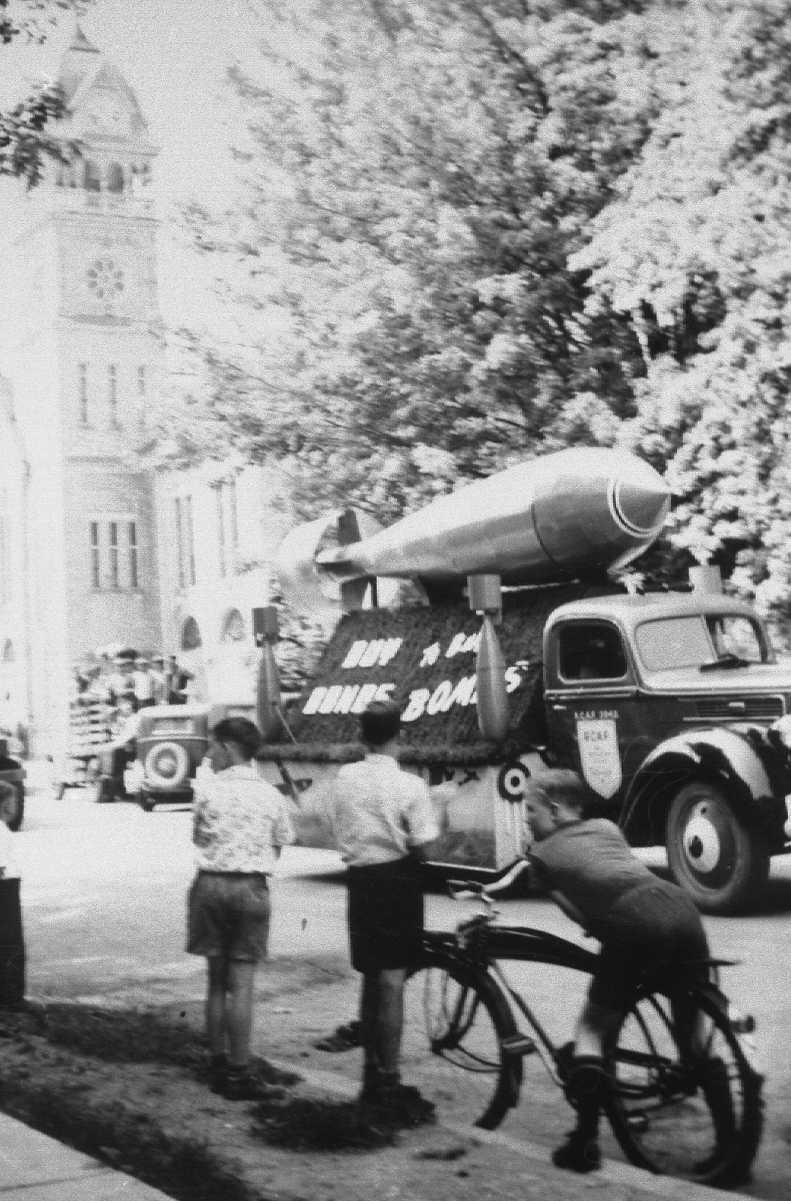
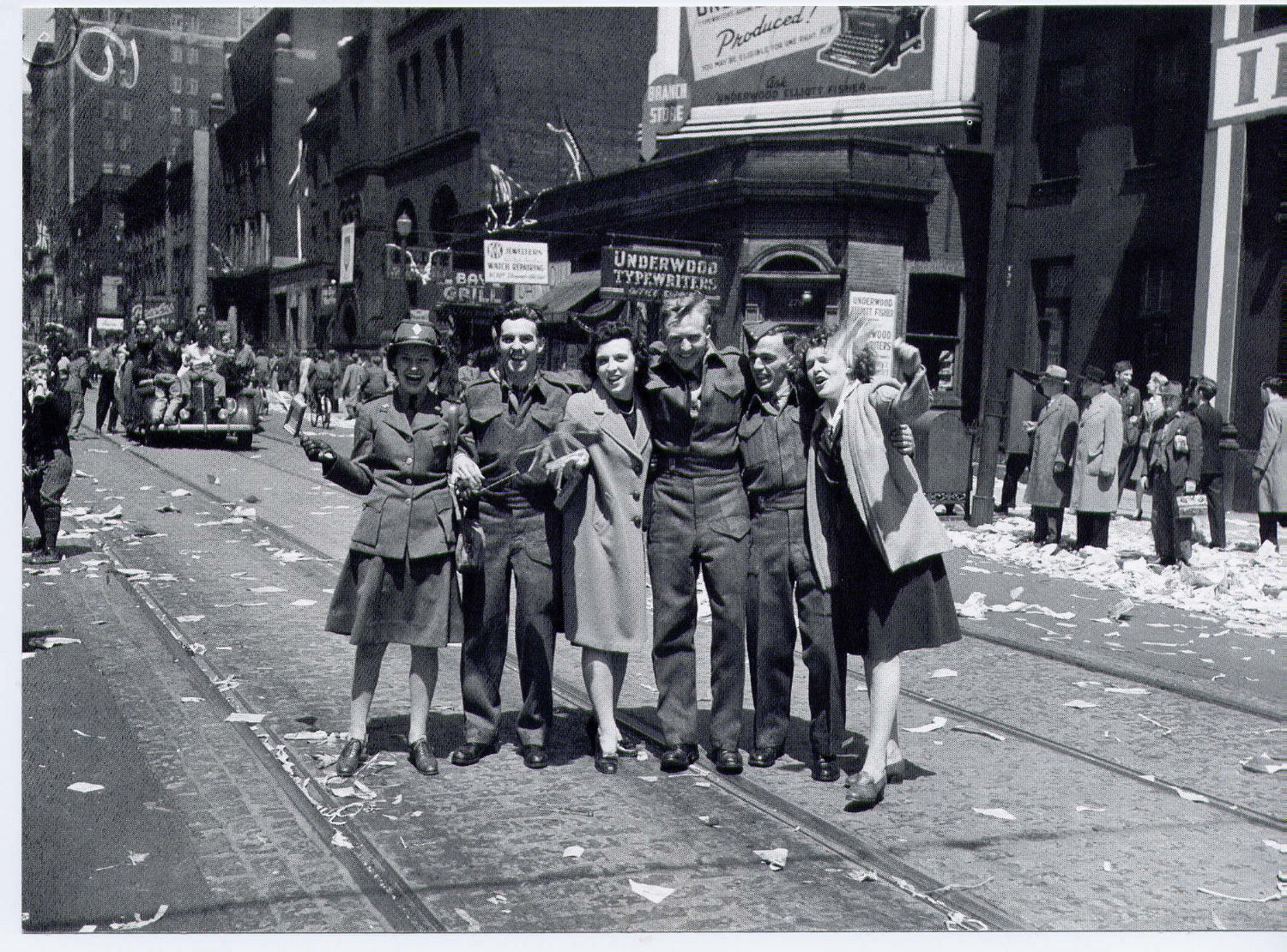 This was the scene in every town everywhere on May 8 1945 when World War 2 was finally over. |
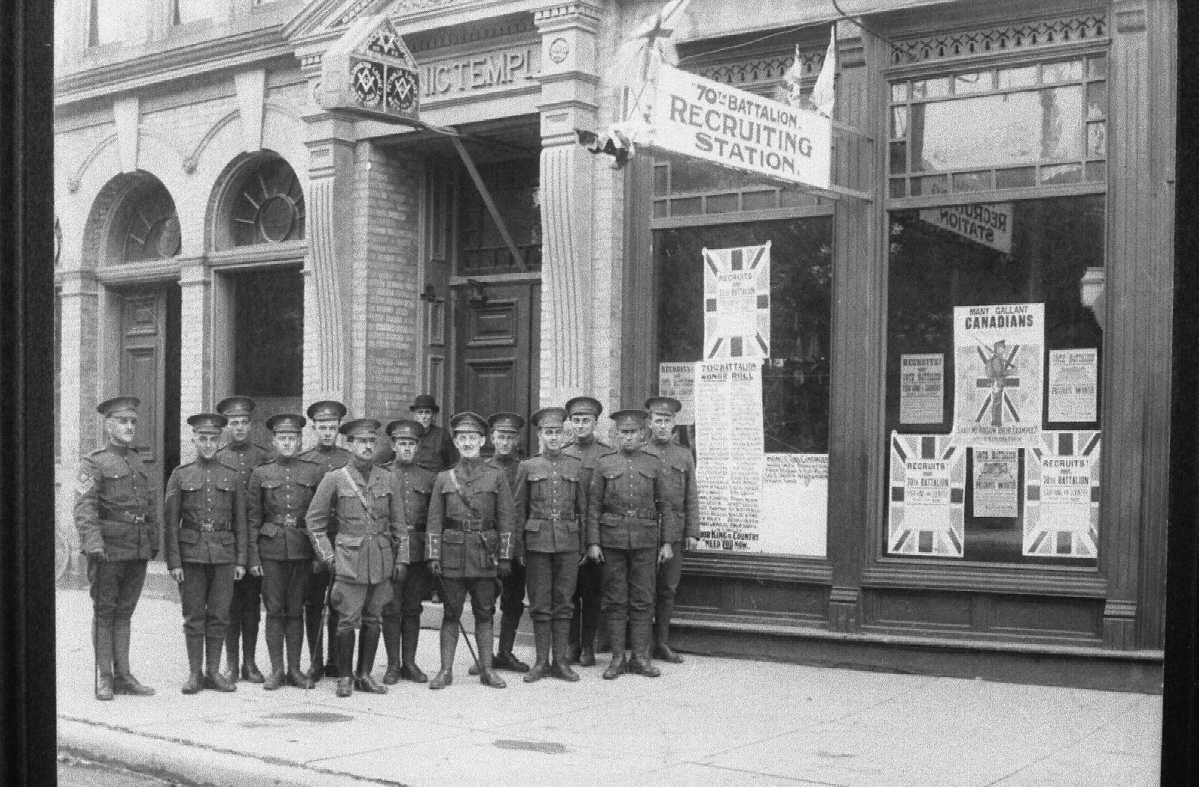
WW1 recruiting office downtown Petrolia editor's collection |
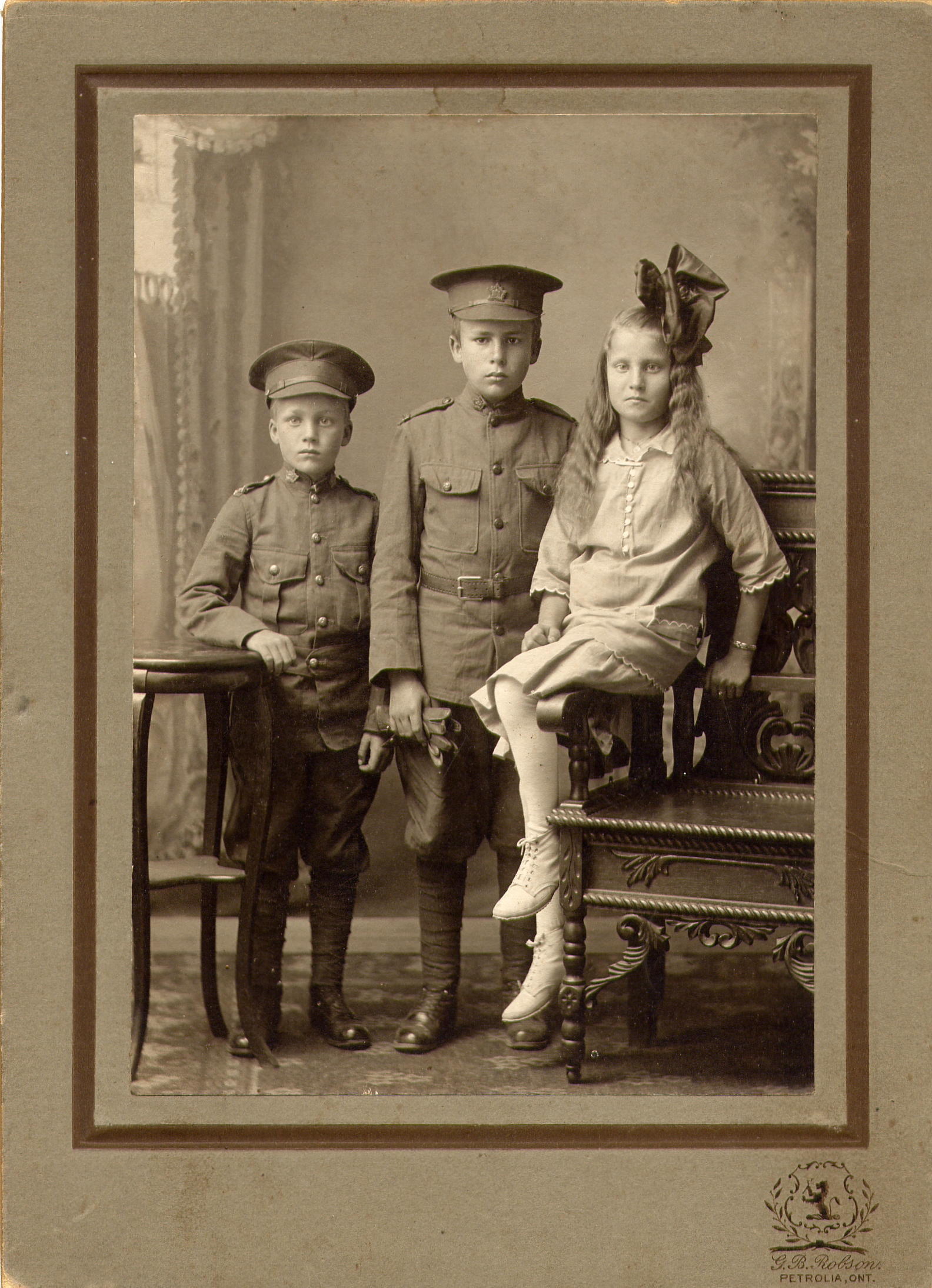
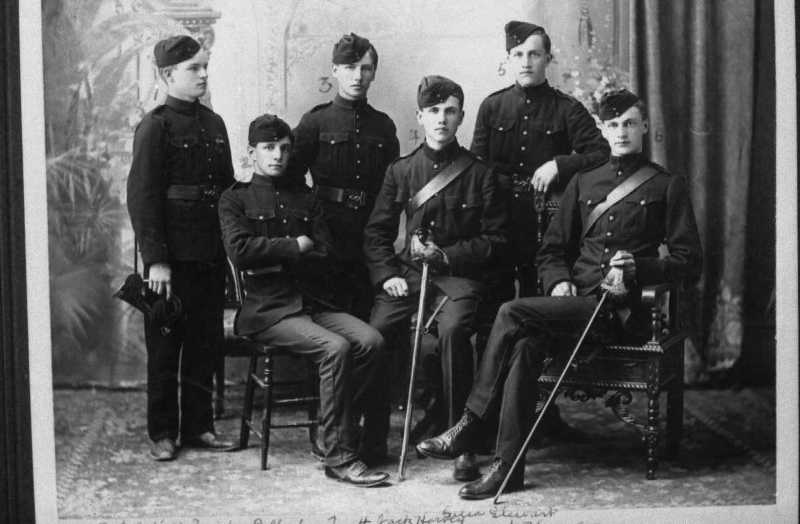 Young Cadets editor's collection |
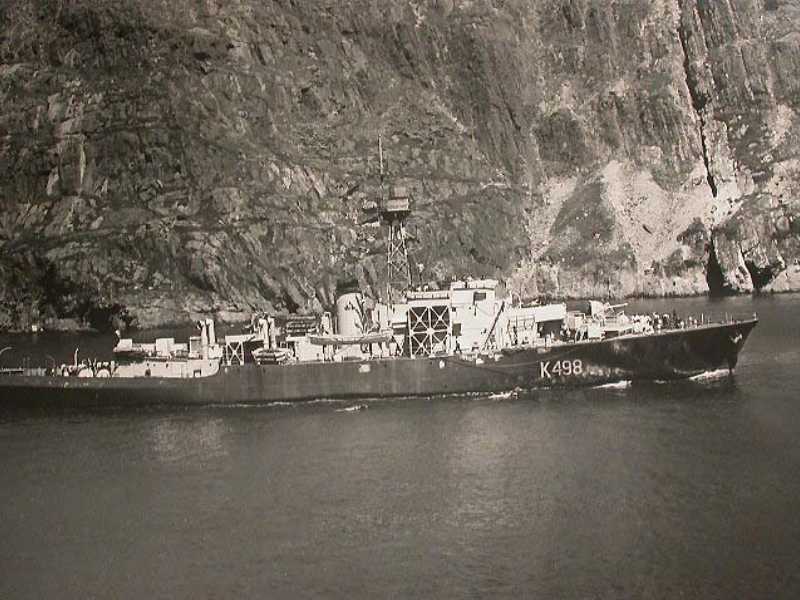 H.M.C.S Petrolia
|
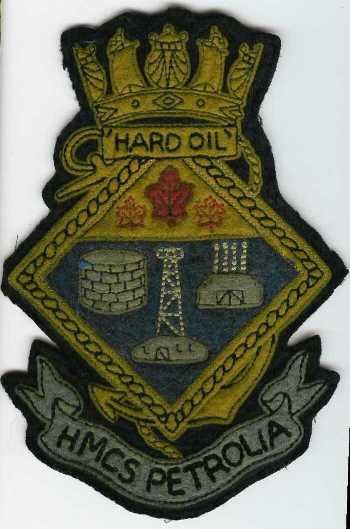 This is the badge worn by the men that sailed the H.M.C.S PETROLIA 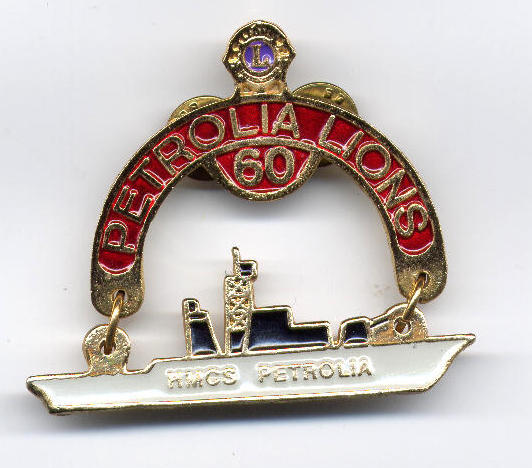
editor's collection A pin for the 60th anniversary of the HMCS Petrolia's service |
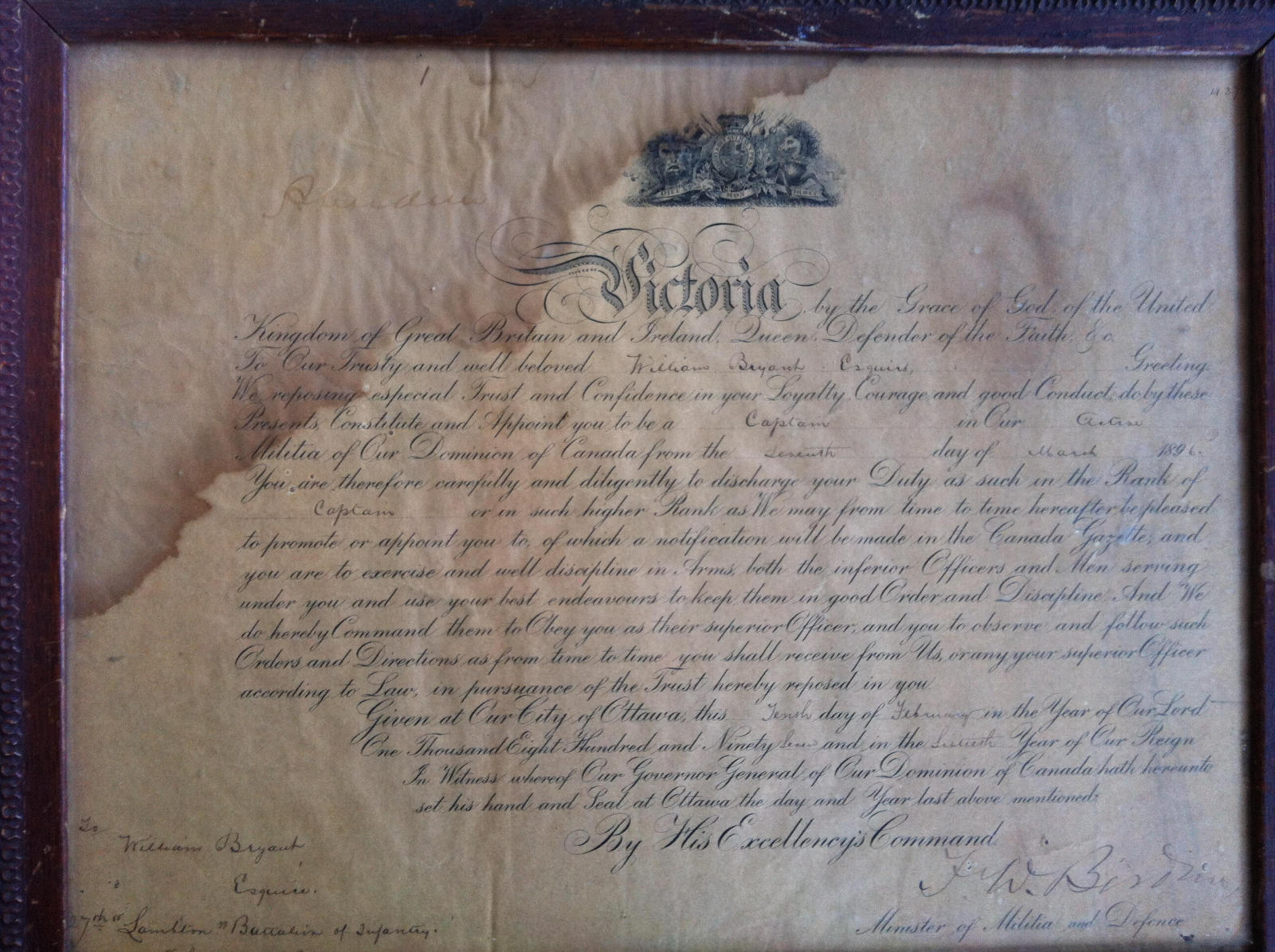 Petrolia military historian Don Gibson just brought over this officer's comision for William Bryant and his cap right. His commision for captain is above. He was in the 27th Lambton Battalion of Infantry ca.1897. |
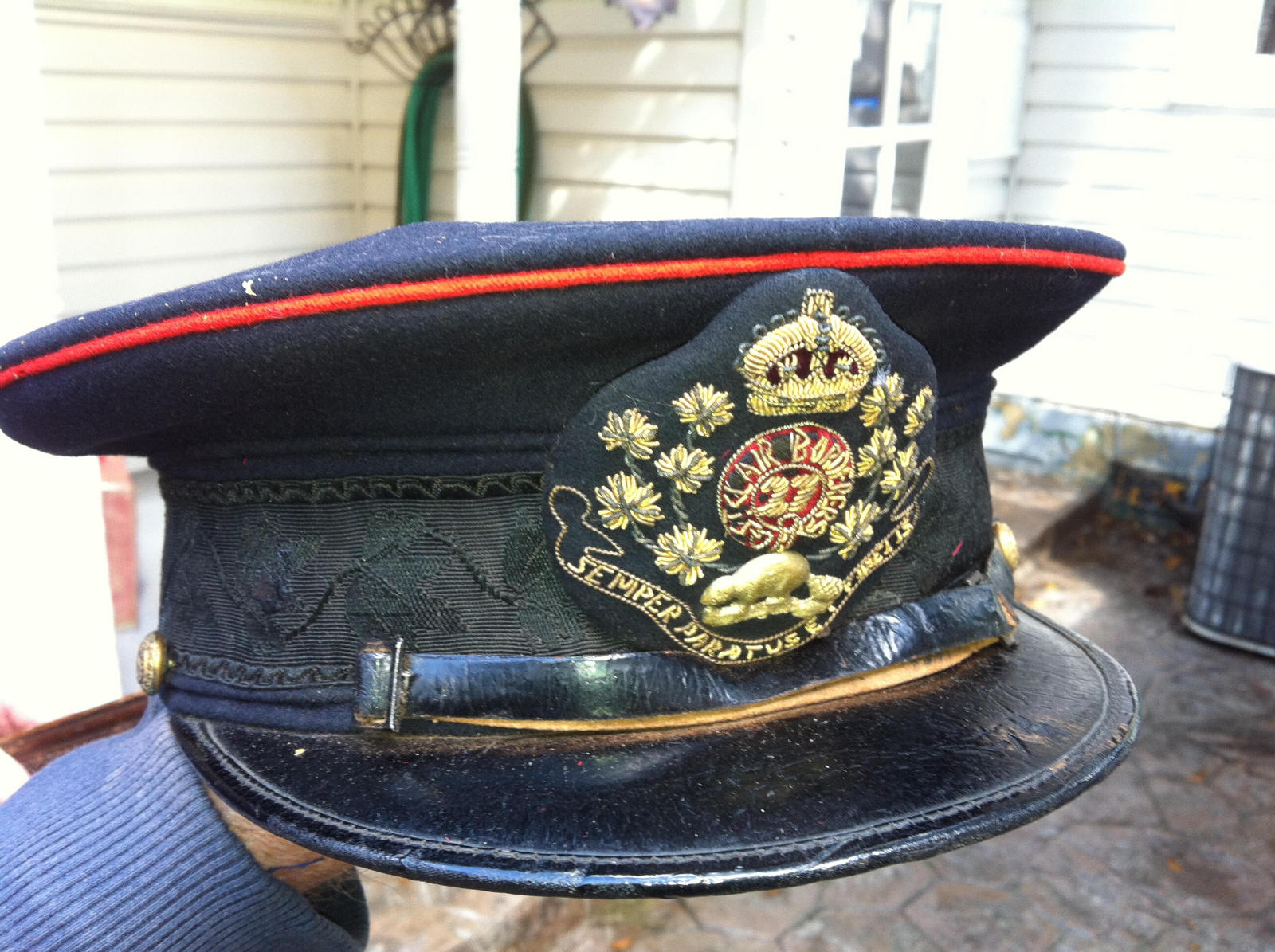 William Bryant's 27th Battalion cap. |
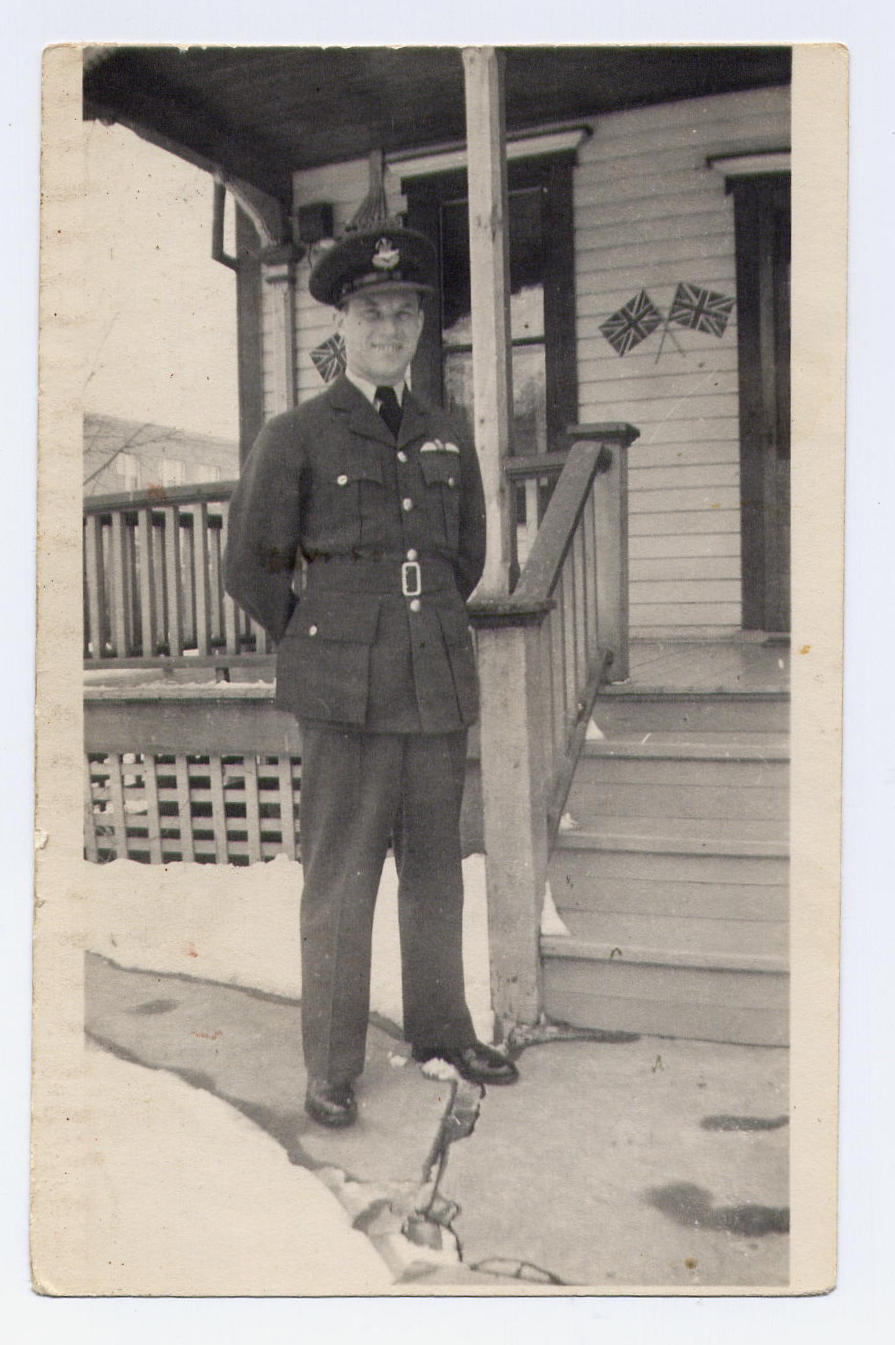 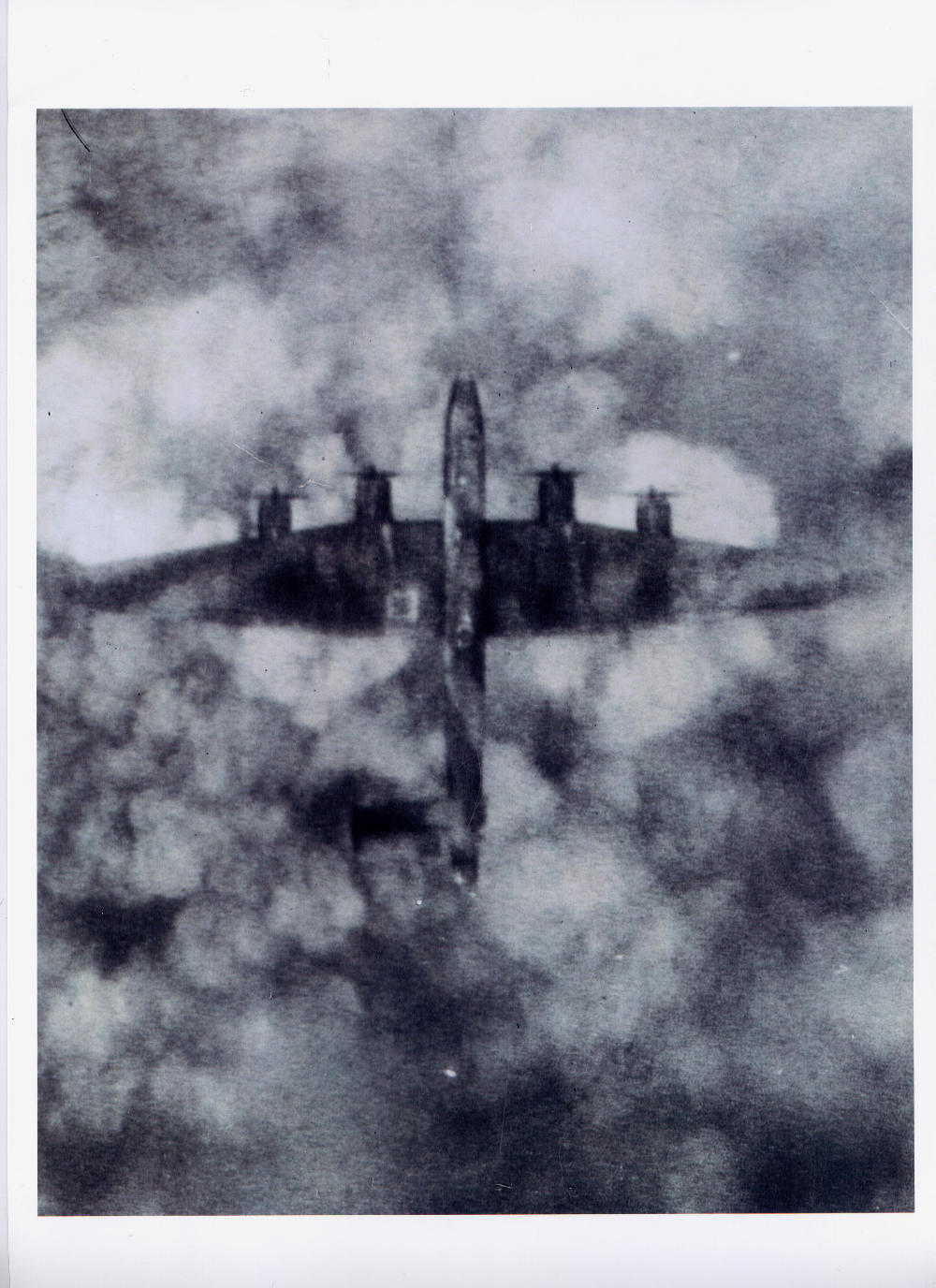 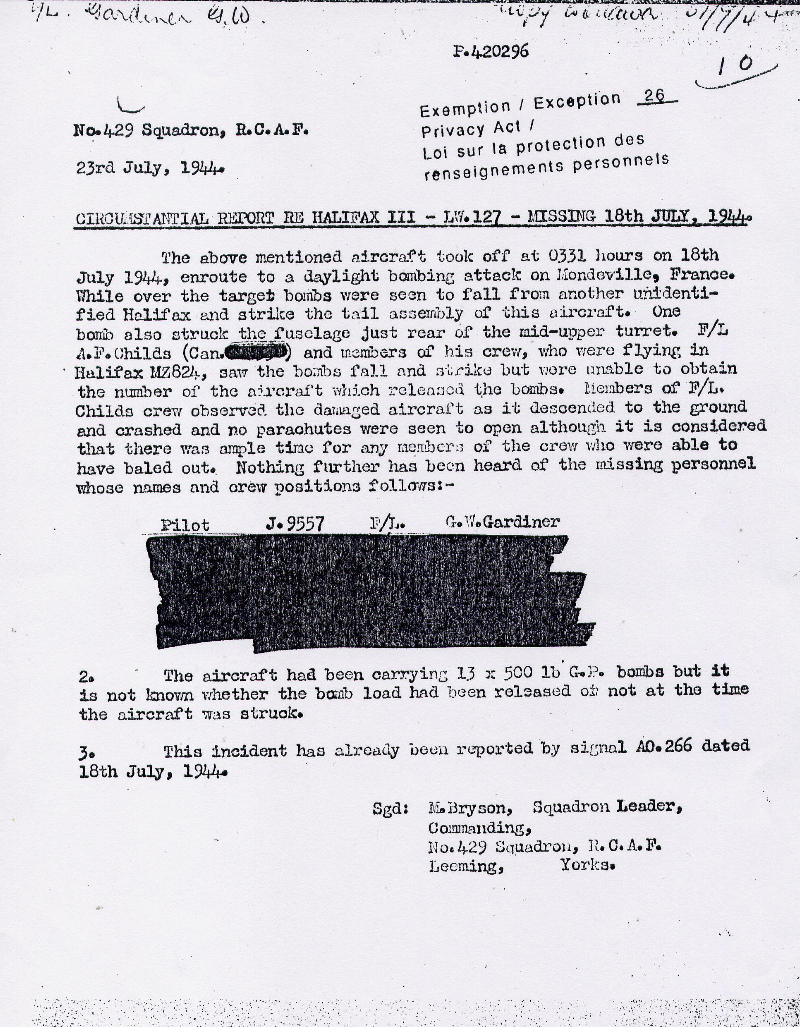 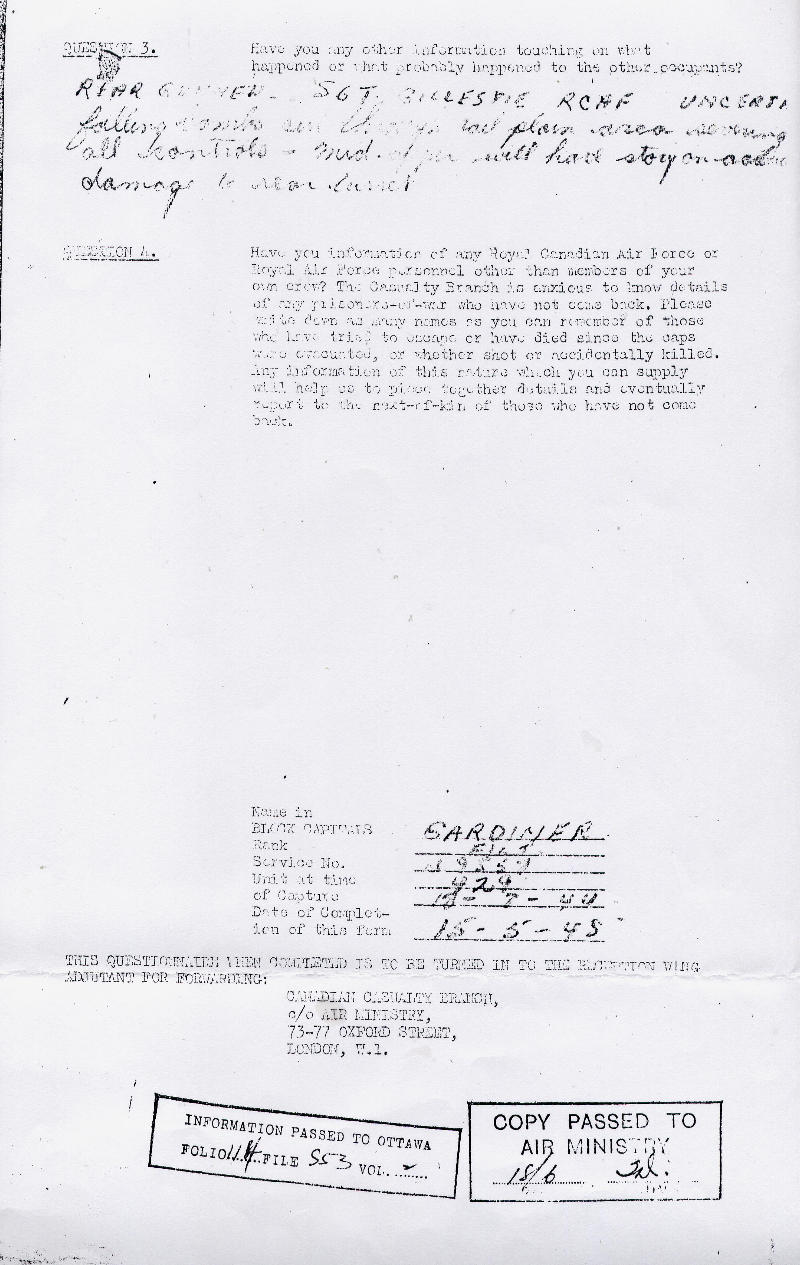 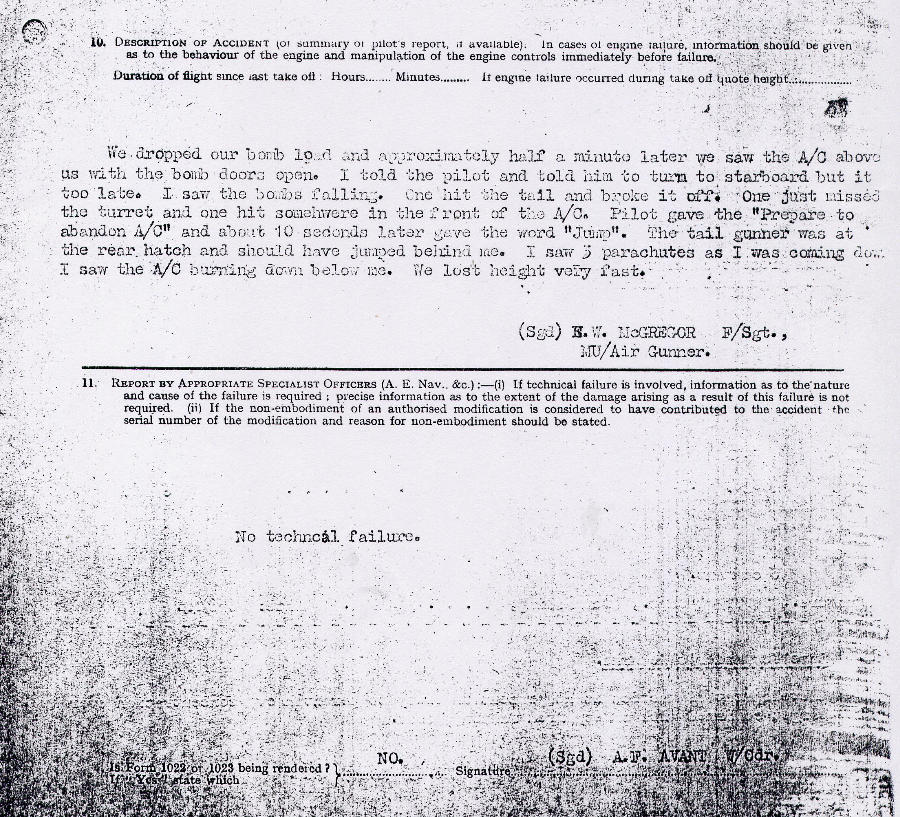 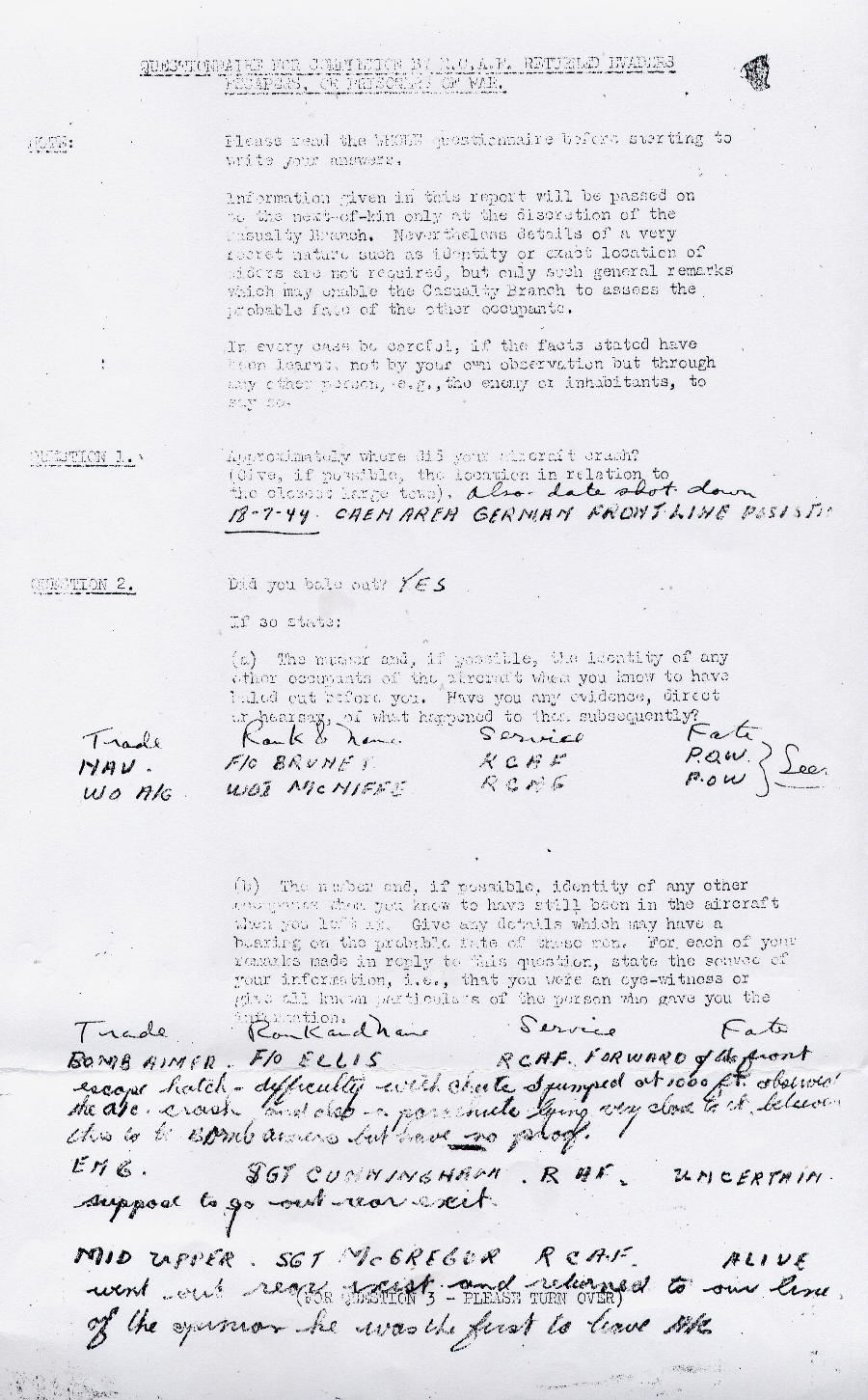 This is a picture of my dad's plane that was taken from the plane above that had dropped his bombs early, now this is just 16mm. film that is run each time the bombbay doors open. This picture was hanging in the London England war museum in the 1960's. out of rotation now. His story for that night follows.... I'm quoting from his RCAF records
F/L George W Gardiner was part of 429 Bison
Squadron in Leeming,Yorks, England. On his 23rd
mission they left July18.1944 at
0331 hours in there Halifax III-LW.127.
Their destination was Monderville, France..
While over the target bombs were seen to
fall from another plane and strike the tail
assembly and the rear fuselage.
Editor's
note: |
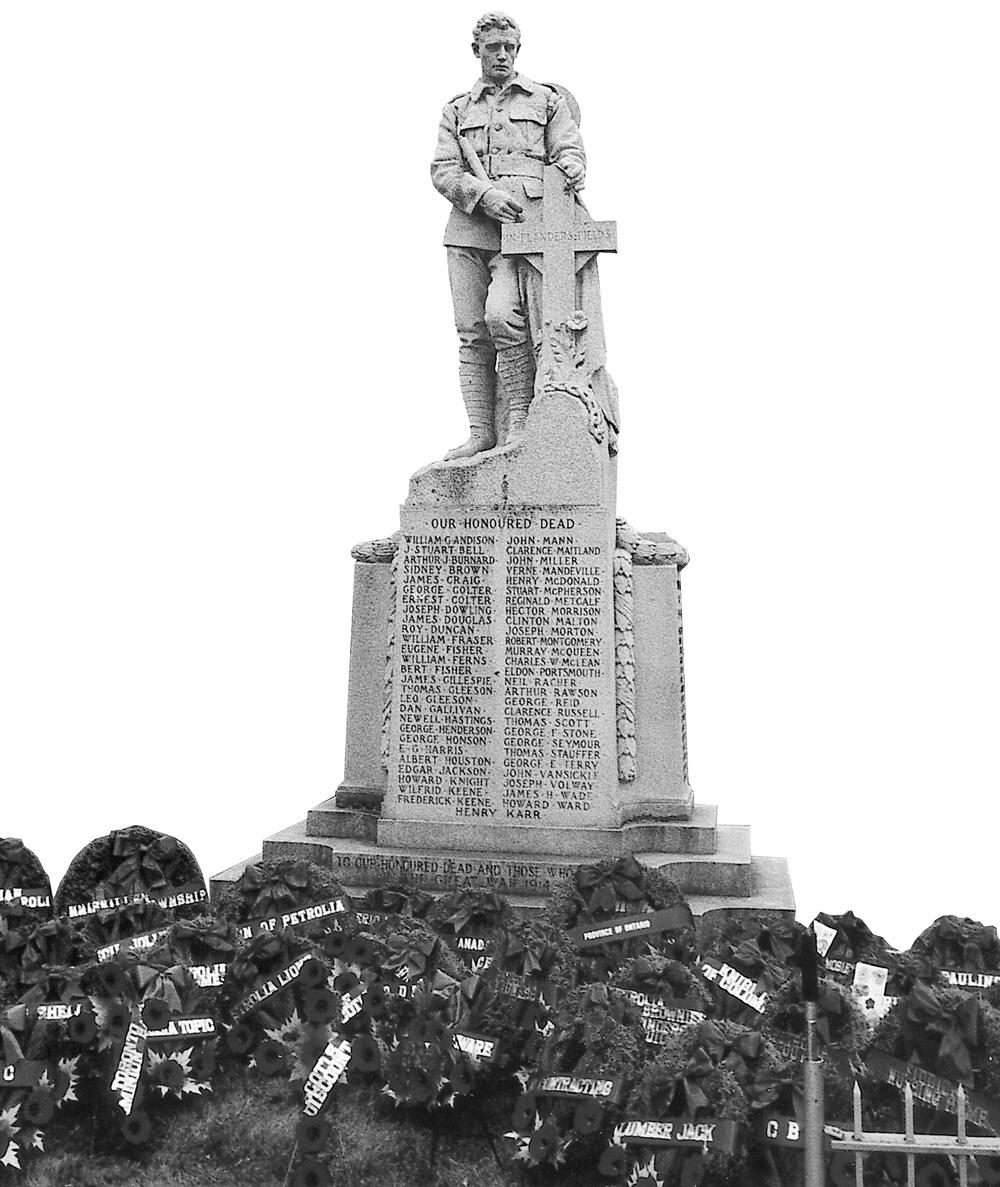 Here is the Petrolia Cenotaph in Victoria Park . It has been designated. The granite soldier was designed by Toronto sculptor, Emmanuel Hahn. It has symbolic details such as the cross the figure holds, the flag draped behind him and the poppies and chain at his feet. The names of 88 area men are inscribed on the monument from WW1. OUR HONORED DEAD WILLIAM G. ANDIRON J. START BELL ARTHUR J. BERNARD SIDNEY BROWN JAMES CRAIG GEORGE CLOTURE EARNEST CLOTURE JOSEPH DOWELING JAMES DOUGLAS ROY DUNCE WILLIAM FRAMER EUGENE FISHER WILLIAM FERNS BERT FISHER JAMES GLIMPSE THOMAS GLEES LEO GLEES DAN GALLIVANT NEWELL HASTINESS GEORGE HENDERSON GEORGE HOMSON E.G. HARRIS ALBERT HOUSTON EDGAR JACKSON HOWARD KNIGHT WILFRED KEENE FREDERICK KEENE HENRY KARR JOHN MANN CLARENCE MAITLAND JOHN MILLER VERNE MANDEVILLE HENRY MCDONALD STUART MCPHERSON REGINALD METCALFE HECTOR MORRISON CLINTON MALTON JOSEPH MORTON ROBERT MONTGOMERY MURRAY MCQUEEN CHARLES W. MCLEAN ELDON PORTSMOUTH NEIL RACHER ARTHUR RAWSON GEORGE REID CLARENCE RUSSELL THOMAS SCOTT GEORGE E. F. STONE GEORGE SEYMOUR THOMAS STAUFFER GEORGE E. TERRY JOHN VANSICKLE JOSEPH VOLWAY JAMES W. WADE HOWARD WARD Emmanuel Hahn info as submitted by Linda Smith, Chairperson of the 2005 'Year of the Veteran Committee' 1881 born in Germany 1888 immigrated with family (incl 2 bros) to Toronto 1899-1903 studied at Toronto Technical School & Ont College of Art 1903-06 studied in Germany 1910 started teaching at OCA 1912-51 head of sculpture dept at OCA till retirement Professional CV: . 1901 McIntosh Marble & Granite Co making bronze reliefs . 1902 Robert Burns monument in Allan Gardens, Toronto . 1903 worked for Canadian Foundry Co. . 1906 Thomson monument . 1908 - 1912 Assistant to Walter Allward, Toronto . 1913 Indian Scout - sold to National Gallery in 1917, Ottawa . 1926 Edward Hanlan monument at CNE, Toronto . 1926 married Elizabeth Wyn Wood, sculptor from Orillia . 1927 elected into Royal Academy of Canadian Art (RCA) . 1928 co-founded Sculptors Society of Canada with E.Wyn Wood, Henri Hébert, Alfred Laliberté, Frances Loring, Florence Wyle . 1929 Sir Adam Beck monument on University Ave, Toronto (assisted by Sing Hoo his protegé - no credit due to Chinese heritage) . 1937 Bluenose for dime (10cents) - still used today . 1937 Cariboo for the quarter (25cents)- still used today . 1939 Voyageur (Indian paddling canoe) for the silver dollar . 1939 Parliament Buildings - also a silver dollar to commemorate the visit of King George VI & Queen Elizabeth . 1946 Stephen Leacock Medal . 1948 Spirit of the Provinces - wood relief sculpture for Ban k of Montreal - worked with E.W.Wood, Jacobine Jones, Donald Stuart, Florence Wyle, & Frances Loring) Exhibitions: 1907 onwards exhibited with the Ontario Society of Artists (OSA) & RCA at Art Gallery of Toronto (AGO today) & at the National Gallery of Canada . included in private & public collections Other points of interest: . 1926 EH winner of competition to produce a war memorial in Winnipeg; did not proceed due to being born in Germany; but was paid $500. . 1927 E.W.Wood won in the second competition for the same memorial; again it did not proceed because she was married to a person born in Germany; but again was paid $500. (it was eventually awarded to Gilbert Parfitt who was British born) . 1965 Sing Hoo produced the full rendering of King George VI for Elizabeth Wyn Wood (during her terminal illness) but never received credit; located in Niagara Falls Emmanuel Hahn 1881-1957 Paul Hahn 1875-1962: cellist, sold music & pianos, extinct & vanishing bird expert (brother) Gustav Hahn 1866-1962: painter, also mem of OSA, RCA (brother) Elizabeth Wyn Wood 1903-1966 |
|
-------------------------------------------------------------------------- Hugh & Clair Sharkey by Mary Hortos When I was researching my family tree I decided I would try to learn as much about my father and his brother as my information gathering would take me. Through their Canadian war records , the War Memorial cemetery and library and the Petrolia Advisor I pieced together this interesting episode of their life. My father Hugh Sharkey although born in London, Ontario was raised in Petrolia. Hugh and Clair were from the era when a “White Feather” was sent for cowardice. Considering the list of killed and wounded from Petrolia I doubt if many received a feather. Hugh and Clair, just teenagers, were allowed to enlist together in the 58 Battalion. My grandmother was a recent widow and it must have been traumatic for her. They were sent overseas on the ship Lapland to England in 1915. One month later they were sent to France. My Father fought at Ypres, Somme and suffered mustard gas exposure at Passchendaele. I can remember by father saying “We walked Ypres to the Somme”. When I was old enough to look it up I discovered that is over 100 miles. Both Hugh and Clair were wounded. My uncle was hospitalized until 1920. He had a steel plate in his head and suffered terrible headaches. Claire died in 1934. Hugh died 9 Oct. 1969. That was 51 years and one day from the day he was gravely wounded. Hugh and Clair went off to war young and happy teenagers. They came home wounded in spirit and body. Hugh’s favourite saying was – “Old soldiers never die they just fade away”. A box for the generations 
Princess Mary's gift to all the solgiers in WW1 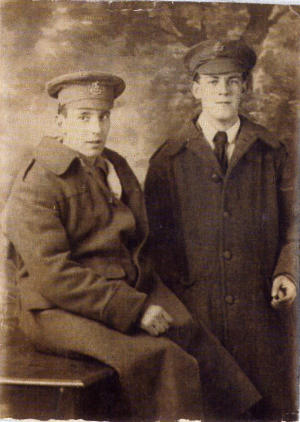 Murry McQueen Hugh Sharkey Murray was killed in action (WW 1 ) but Hugh survived the war. Enlisted in the 70th & transferred to the 58th Batallion overseas. The Sharkey family owned and operated the Normandy Hotel in Petrolia for 11 years in the early 1900's The Normandy was destroyed by fire in ca. 1915. |
----------------------------------------------------------- Princess’ gift is a bit of history and a treasured keepsake If I had given it any thought when I first wrote about it last month, it might have occurred to me that there are others around here who still have the same kind of little brass box my grandfather had carried home from World War I. In an August column, I told the story of how my grandfather, a member of an Irish regiment in the British army, was given the box Christmas 1914, along with other British soldiers serving in France. I explained that shortly after it came into our possession in the late 1940’s my youngest brother, Bill, traded the brass box to a boyhood friend in exchange for a pocketknife. When that boyhood friend, Gil Groehn, married and had a family, one of his daughters, Deanna, more commonly know as Dede, met and married one of my sons, Jim, who was named, as fate would have it, James Conlon Shine, after his great-grandfather, the original owner of the box. After about 35 years in the Groehn family, the box came back to the Shines when Gil Groehn sent it to Dede and Jim’s first son, Colin, on the first Christmas after he was born in 1983. In the week or so after the column appeared, I got several calls from people who had identical boxes, each passed on from a relative who had served with the British forces in World War I. Most of them reminded me that the box contained cigarettes, not candy, as I had written. By mail I hear from several others, each with their own story of the box. Mary Hortos of New Baltimore said it was passed down from her father, Hugh Sharkey, who served in France with the Canadian army. She said he carried it with him through the battles of Passchendaele, Ypres and the Somme. “He told me it saved his life on one occasion,” she wrote, “but he did sustain injuries to he left arm (and) shoulder…” She credits the box with “giving him life for another 51 years and one day”. Margaret Lotemoser’s father was also in the Canadian army in World War I, and brought the box home with him. “My father passed away in 1935 from injuries resulting from the war,” she wrote. “As I was only 7 years old at the time, so many things were not talked about. My mother just tucked those articles away. “I had always wondered how he had come to have such a box. Now I have a little history to pass on to my children and grandchildren.” William Fagan, an antiques dealer in Clinton Township, wrote to tell me that the brass box is called the Princess Mary gift tin, and that he sees these in his business from time to time. Information on how the box came to be named after Princess Mary came in a letter from Mary Graham of Grosse Pointe Farms who has a box that was her father’s. She sent along a 1984 magazine article that traced the history of the box. Princess Mary was the only daughter of King George V (two of her brothers later ascended to the throne, known as Edward VIII and George VI), and was known as the Princess Royal. The war was in its first year when Mary, then 17, told her father she wanted to send a Christmas gift to every soldier in France. She also said she wanted to pay for it from her own income. She was persuaded that the cost would be far greater than her means, and she should make a public appeal for funds to support her project. The first appeal was made Nov. 16, 1914. She told the British public that she wanted to send to “the soldiers and sailors who are so gallantly fighting our battles by land and sea,” a present from the entire nation. “On Christmas Eve, when, like the shepherds of old, they keep their watch, doubtless their thoughts will turn to home and loved ones left behind, and perhaps, too, they will recall the days when, as children themselves, they were wont to hang out their stockings, wondering what the morrow had in store. “I am sure,” her letter continued, “that we should all be the happier to feel that we had helped to send our little token of love and sympathy on Christmas morning…Could there be anything more likely to hearten them in their struggle than a present received straight from home on Christmas Day? Please will you help me? Mary.” The public responded and very quickly the target figure of 100,000 pounds was exceeded. The gift that Mary already had selected was a brass box that would contain cigarettes and tobacco; a pipe was sent separately. Since the Indian troops did not use tobacco, their boxes contained candy, as did those of nurses and non-smokers. Mary suggested that the head of the King appear on the box but her father said that since it was her idea and her project, the boxes should carry her likeness. So the profile of the Princess Royal appeared on each box inside a garlanded circle. In addition to tobacco or candy, each box also contained a Christmas card inscribed “From Princess Mary and Friends at home with her best wishes for a happy Christmas and a victorious New Year.” What she probably never dreamed of that dark winter in 1914 was how many soldiers would carry those little boxes with them for the next four years, bringing them home after the war to families that would treasure them for generations. Editors note Thanx Marg for typing items from letters to Etext for me -------------------------------------------------------------------------------------- 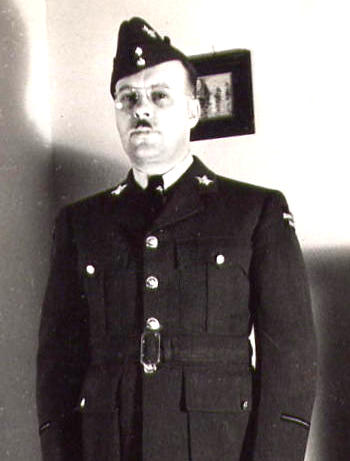
COJacquesCFO |
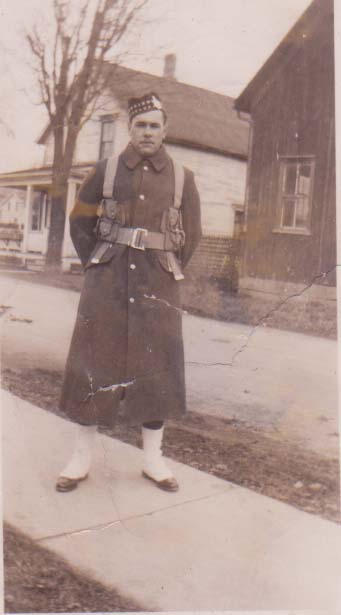 I am enclosing a photo of Pvt Les Morley. This photo was taken in front of the Morley home on Wingfield Street. One of my early memories of WWII was my mother taking food over to the Morleys when news came of his death on August 19, 1942 at Dieppe. My father was also in the 2nd division, but he was not involved in the raid. We lived at the end of Blanche St. on the west side of the street. L Simpson. |
|
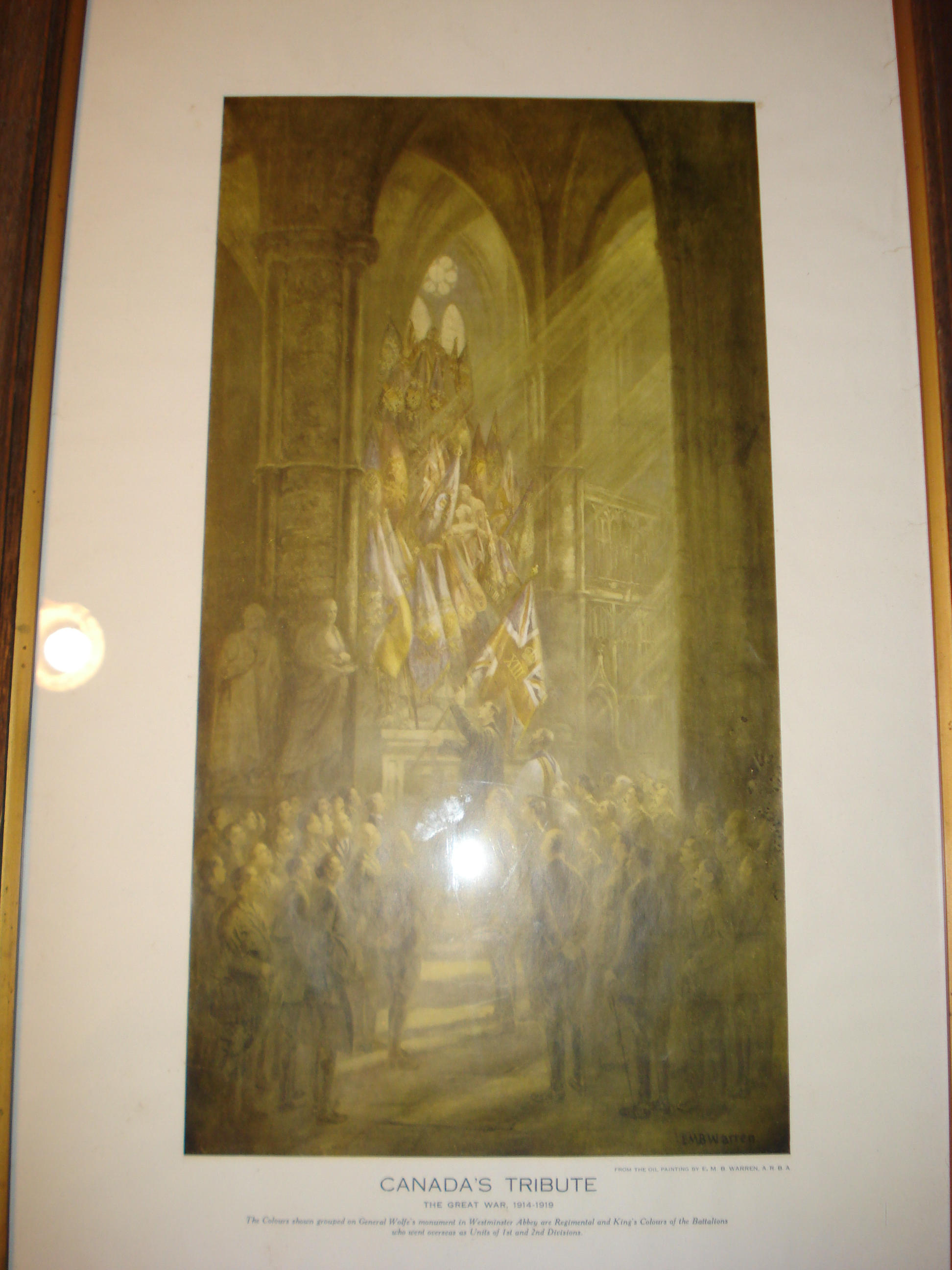 This is a very nice military print that I purchased locally. It is entitled 'Canada's Tribute to the Great War 1914-1919'. From the painting by E.M.B. Warren. It was donated to the Petrolia High School, Jubilee of Confederation- July 1st 1927. It was presented to Miss M.A. Higginson. I looked her up in the 1926 Petrolia High School yearbook and there she is. We will need to do more research on this item but here it is with the description that is included on the back of the print in it's frame.The description is included here at right in 2 pieces. A very cool item but the significance to Petrolia history remains to be seen. |
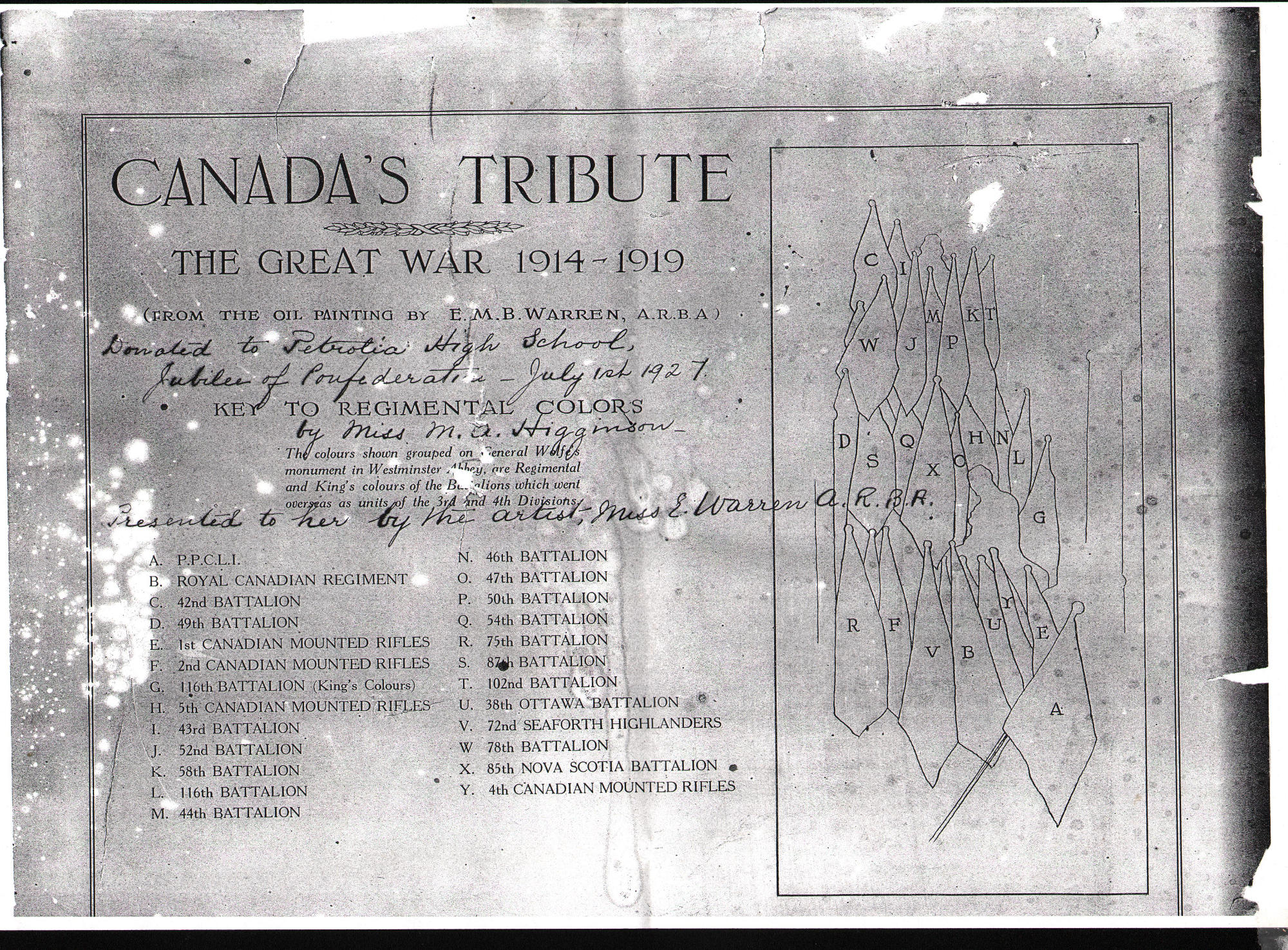 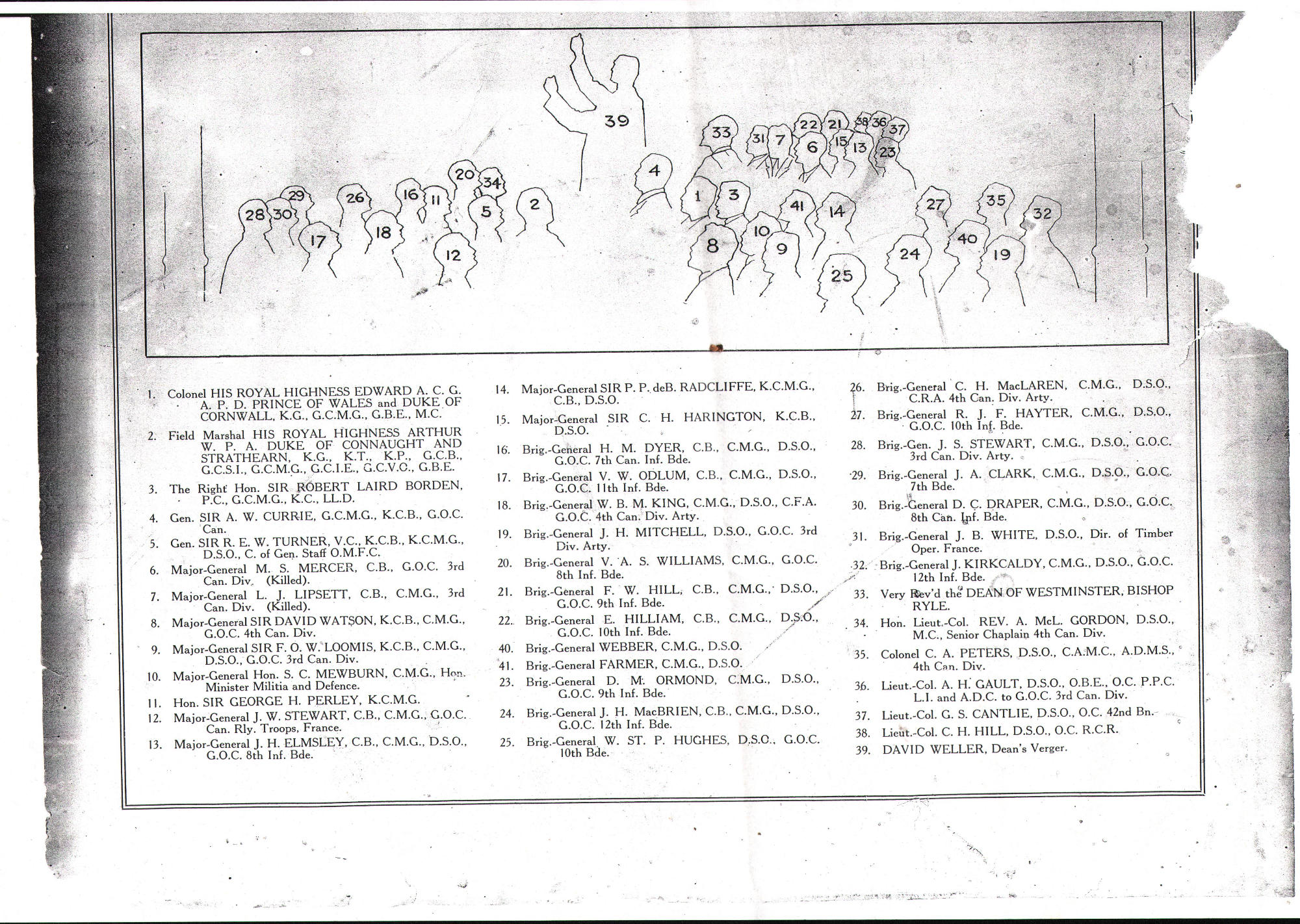 |
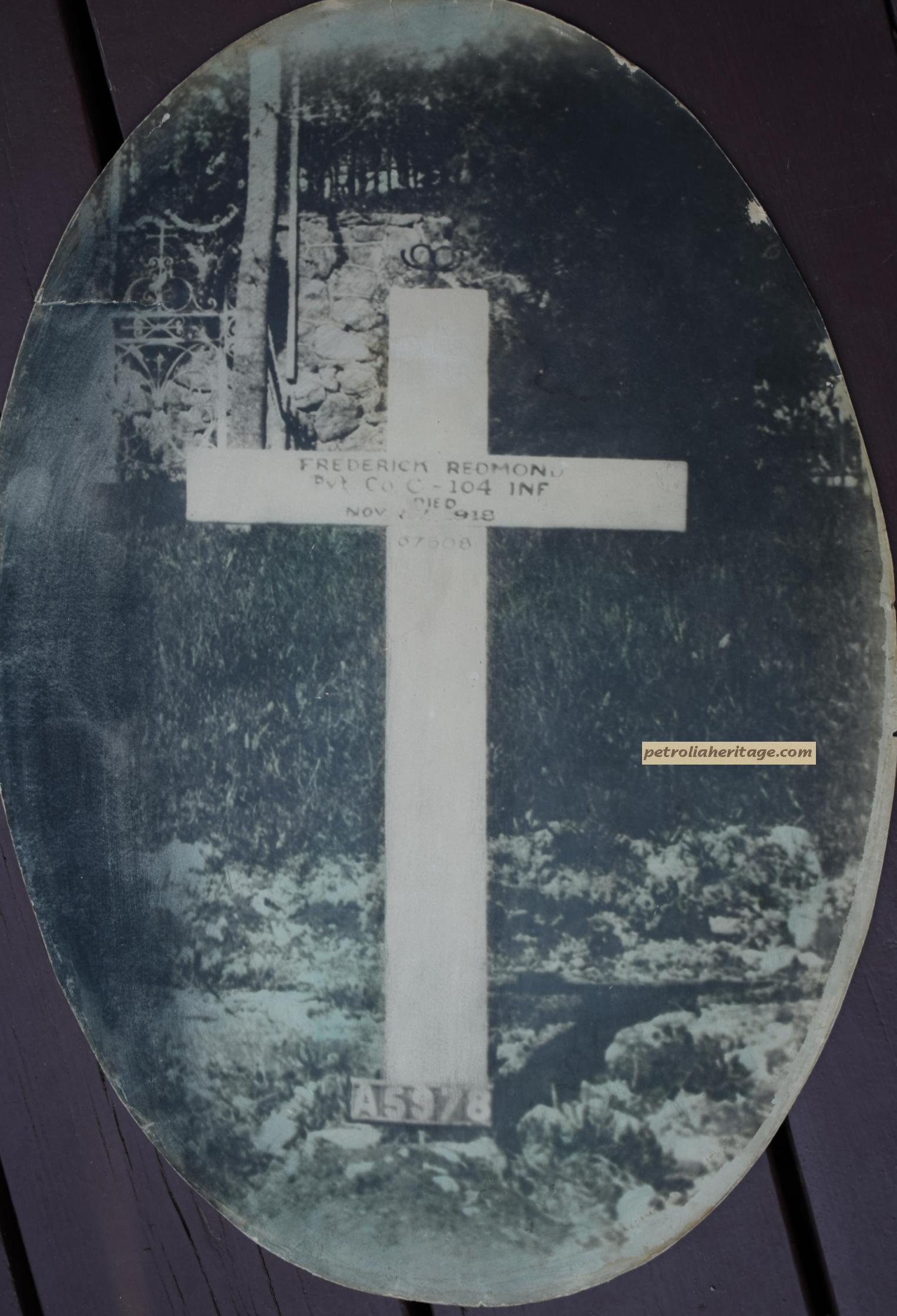 The back of this photo reads Frederick Redmond born 1844 father of Frederick Redmond born 1844 son Whitney born 1900 |
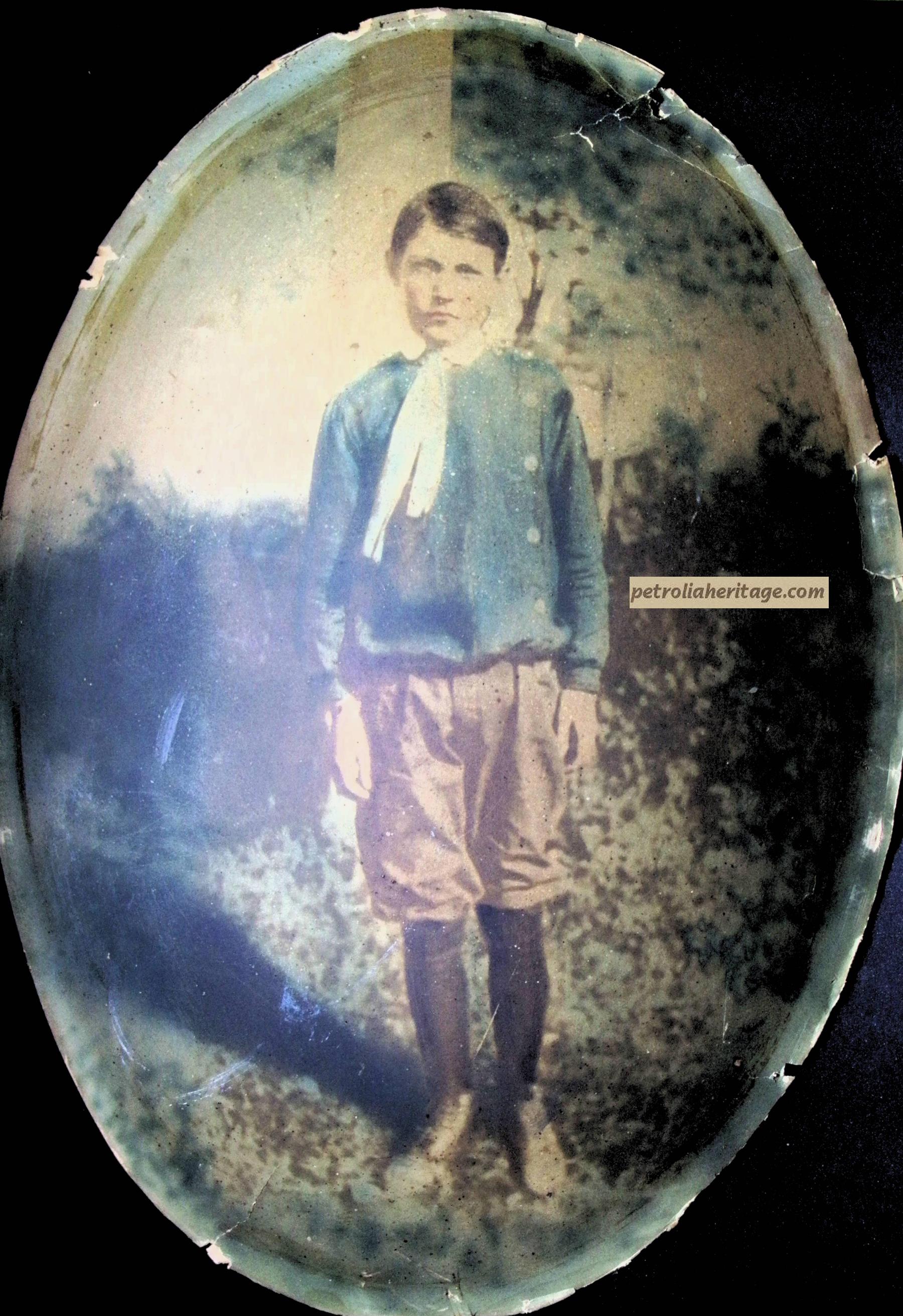 Bought some big oval frames with bubble glass and this was the large photo that was in one of them. This was an Oil Springs auction. I am posting both pictures here in hopes that someone will appreciate them. The back says Whitney Redmond age 18. I think this is some sort of cadet uniform. Please correct me if wrong. thanx to David Hext for photographing these 2 photos as they didn't scan well because they are ovalled. |

|
The Pirate General Morreau in
Petrolia????
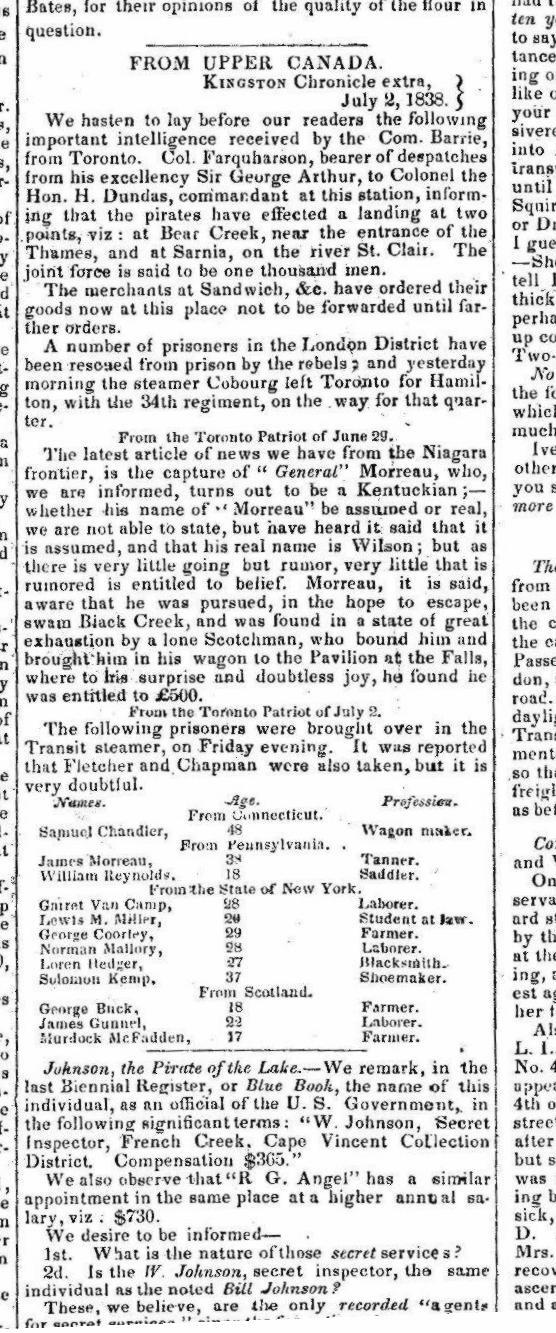 editor's collection |
|
Thank you so much to those that keep sending me Petrolia Military pics and text It is an honour to post it!!!!!!
Email Martin at mdillon16@cogeco.ca